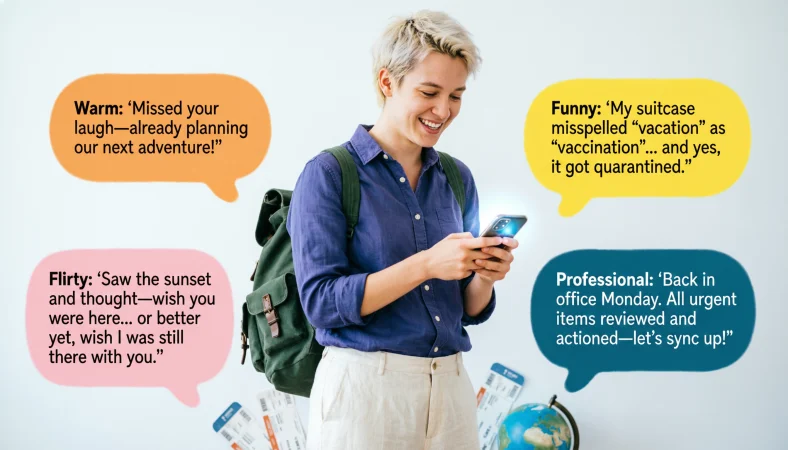
When someone says “Hope you had a great holiday,” the best reply depends on your relationship and the vibe you want to create. You can keep it simple, warm, funny, or use it as an easy way to continue the conversation.
Top alternatives: Thanks, I had a lovely time!, Thank you, hope you did too!, It was wonderful, thanks for asking!, I really enjoyed it!, Thanks, it was just what I needed!
Getting a message like “Hope you had a great holiday” is basically an invitation to keep the conversation going. Whether it lands in your texts, DMs, workplace inbox, group chat, or a message from someone you have a little crush on, your response can say more than a simple “thanks.”
The right reply can sound warm, appreciative, funny, friendly, or even subtly flirty without making things awkward. That is why knowing the best replies to someone saying hope you had a great holiday can make those everyday conversations much easier. Maybe your holiday was amazing, mildly chaotic, or mostly you searching for your charger.
Whatever happened, there is a reply for it. Pick a response that matches the person, the situation, and your mood, then let the conversation flow naturally.
Funny Responses:
“Thanks! I survived it, so I’m calling that a win.”
Use this after a busy or chaotic holiday when you want to make them laugh.
Meaning: You are joking about surviving a hectic break while still showing appreciation.
“I did, although my sleep schedule did not.”
Use this when your holiday was relaxing but completely ruined your normal routine.
Meaning: You are giving a playful answer about the classic post-holiday sleep struggle.
“It was great, thanks! My bank account disagrees.”
Use this after an expensive trip, shopping spree, or restaurant-filled holiday.
Meaning: You are humorously admitting that the holiday was fun but costly.
“Absolutely! I ate like I was being paid to do it.”
Use this when food was one of the highlights of your holiday.
Meaning: You are playfully emphasizing how much you enjoyed the holiday meals.
“It was lovely. I may need another holiday to recover from it.”
Use this after a packed schedule or busy family celebration.
Meaning: You are joking that your relaxing break somehow became exhausting.
“Thanks! Ten out of ten, would procrastinate responsibilities again.”
Use this when you happily ignored work or chores during your break.
Meaning: You are celebrating the freedom of doing absolutely nothing productive.
“It was great! I successfully avoided thinking about Monday.”
Use this near the end of a holiday weekend.
Meaning: You are joking about enjoying the break while avoiding thoughts of returning to work.
“Thanks! I came back with memories and approximately zero motivation.”
Use this when returning to your normal routine feels difficult.
Meaning: You are saying the holiday was enjoyable but left you unprepared for everyday life.
“It was fantastic. My suitcase is still recovering.”
Use this after a trip involving lots of packing and unpacking.
Meaning: You are making the travel experience sound humorously dramatic.
“I did! The snacks deserve most of the credit.”
Use this when food and treats were a major part of your holiday.
Meaning: You are giving a playful reason for why the holiday felt so enjoyable.
“It was great, but I’m already mentally booking the next one.”
Use this when you loved your holiday and want to joke about needing another break.
Meaning: You are showing that you enjoyed yourself and are not ready to return to routine.
“Thanks! I left, relaxed, ate everything, and returned victorious.”
Use this after a holiday filled with relaxation and good food.
Meaning: You are humorously presenting your holiday as a complete success.
Warm And Friendly Responses:
“Thank you! I had a really lovely time.”
Use this when responding warmly to a friend, colleague, or acquaintance.
Meaning: You are expressing genuine appreciation and sharing that you enjoyed your holiday.
“Thanks so much! It was really nice to have some time away.”
Use this after taking a relaxing break from your usual routine.
Meaning: You are highlighting how refreshing the holiday felt.
“Thank you! It was wonderful, and I hope yours was too.”
Use this when you want to return the good wishes.
Meaning: You are being thoughtful while keeping the response friendly.
“Thanks for asking! I really enjoyed it.”
Use this when someone shows genuine interest in how your holiday went.
Meaning: You are acknowledging their kindness and giving a positive response.
“Thank you! It was exactly the break I needed.”
Use this when your holiday helped you recharge.
Meaning: You are saying the time away was personally refreshing.
“Thanks! I had a beautiful time and made some lovely memories.”
Use this after a memorable trip or celebration.
Meaning: You are sharing a sincere and positive reflection.
“That’s so kind of you, thank you! I really did.”
Use this when you want to sound especially appreciative.
Meaning: You are warmly acknowledging their thoughtful message.
“Thank you! It was peaceful, fun, and much needed.”
Use this when your holiday combined relaxation and enjoyable activities.
Meaning: You are describing the break as both enjoyable and restorative.
“Thanks! I had a great time and came back feeling refreshed.”
Use this after a genuinely relaxing holiday.
Meaning: You are communicating that the break improved your mood and energy.
“I did, thank you! It was such a lovely change of pace.”
Use this when you enjoyed stepping away from your normal routine.
Meaning: You are expressing appreciation for the refreshing experience.
“Thank you for asking. It was really special.”
Use this when your holiday had emotional or personal significance.
Meaning: You are giving a sincere response without oversharing.
“Thanks! I really appreciated the time away.”
Use this for a simple, mature response to someone who checked in.
Meaning: You are expressing gratitude for the break.
Polite Responses:
“Thank you, I really appreciate that.”
Use this when replying to someone you do not know particularly well.
Meaning: You are politely acknowledging their thoughtful message.
“Thank you! I had a lovely holiday.”
Use this in everyday conversations with acquaintances or colleagues.
Meaning: You are giving a courteous and positive response.
“That’s very kind of you, thank you.”
Use this when you want to sound gracious and respectful.
Meaning: You are showing appreciation for their good wishes.
“Thank you! It was very enjoyable.”
Use this when you prefer a polished but friendly response.
Meaning: You are confirming that you enjoyed the holiday.
“Thanks for your kind wishes. I had a wonderful time.”
Use this when responding to a thoughtful message.
Meaning: You are combining gratitude with a positive update.
“Thank you! I hope you had a pleasant holiday as well.”
Use this when you want to return the sentiment politely.
Meaning: You are extending the same kindness back to them.
“Many thanks! It was a very nice break.”
Use this in a slightly more formal social setting.
Meaning: You are expressing appreciation in a polished way.
“Thank you for asking. I had a great time.”
Use this when someone checks in after your time away.
Meaning: You are answering clearly while staying courteous.
“Thanks very much. I thoroughly enjoyed it.”
Use this when you want a refined and positive response.
Meaning: You are emphasizing that you genuinely enjoyed your holiday.
“Thank you! It was lovely to get some time away.”
Use this when your holiday gave you a welcome change from routine.
Meaning: You are politely highlighting the value of the break.
“I appreciate you asking. It was wonderful.”
Use this when you want to sound thoughtful and composed.
Meaning: You are acknowledging their interest while sharing a positive update.
“Thank you! I hope you had a great holiday too.”
Use this when you want to keep the exchange mutually friendly.
Meaning: You are returning their good wishes.
Professional Responses:
“Thank you! I had a very enjoyable break.”
Use this in a workplace message after returning from leave.
Meaning: You are being friendly while maintaining professional boundaries.
“Thanks for asking. I had a wonderful holiday.”
Use this when responding to a colleague or manager.
Meaning: You are offering a pleasant but professional update.
“Thank you, I really enjoyed the time away.”
Use this after returning to work refreshed.
Meaning: You are acknowledging their kindness in a polished way.
“Thank you! It was a great opportunity to recharge.”
Use this when discussing your holiday with coworkers.
Meaning: You are framing the break positively and professionally.
“Thanks! It was lovely, and I hope you had a good break too.”
Use this when replying to a colleague who asks about your holiday.
Meaning: You are keeping the exchange warm and reciprocal.
“Thank you for asking. It was relaxing and enjoyable.”
Use this when you want a straightforward professional answer.
Meaning: You are sharing a positive experience without unnecessary details.
“Thanks very much. I had a really pleasant time.”
Use this in workplace chats or emails.
Meaning: You are responding courteously and positively.
“I appreciate that. The holiday was excellent.”
Use this when you want to sound professional and concise.
Meaning: You are expressing gratitude while confirming that the holiday went well.
“Thank you! I came back feeling refreshed and ready to get started.”
Use this after returning to work.
Meaning: You are connecting your holiday with renewed energy.
“Thanks for checking in. I had a great break.”
Use this when a colleague shows friendly interest.
Meaning: You are appreciating their message while keeping things professional.
“Thank you. It was exactly the break I needed.”
Use this when you want to sound natural but still workplace appropriate.
Meaning: You are saying the time away was beneficial.
“Thanks! It was a lovely break, and I hope yours went well too.”
Use this when you want to return the workplace courtesy.
Meaning: You are being professional, friendly, and considerate.
Flirty Responses:
“It was great, but it could’ve been even better with you there.”
Use this when replying to someone you are romantically interested in.
Meaning: You are adding a clear but playful hint of attraction.
“Thanks! Now I’m wondering how your holiday went.”
Use this when you want to turn the message into a personal conversation.
Meaning: You are showing interest in them while keeping the flirtation subtle.
“It was lovely. Your message just made the return even nicer.”
Use this when you want to compliment someone without going too far.
Meaning: You are making them feel special in a warm, flirty way.
“It was good, but I think I’m more interested in hearing about yours.”
Use this when you want to shift attention toward them.
Meaning: You are showing genuine curiosity with a subtle romantic tone.
“Thanks! I had a great time. Would’ve been more fun with good company though.”
Use this when playful flirting already exists between you.
Meaning: You are suggesting that their company would have improved the holiday.
“I did, thanks. Although I wasn’t expecting such a sweet message from you.”
Use this when you want to tease someone affectionately.
Meaning: You are complimenting their thoughtfulness while adding a little flirtation.
“It was wonderful. Now tell me when your next holiday is.”
Use this when you want to keep the playful energy going.
Meaning: You are showing interest in spending more time talking to them.
“Thanks! It was great, but your timing is pretty cute.”
Use this when their message arrives at a fun moment.
Meaning: You are turning their simple kindness into playful flirtation.
“I did. Maybe next time we should plan one together.”
Use this only when there is already mutual romantic interest.
Meaning: You are making a playful suggestion about sharing a future trip.
“It was lovely, but I think I just found my favorite message to come back to.”
Use this when you want to make their message feel special.
Meaning: You are giving them a sweet and flirtatious compliment.
“Thanks! Now I’m curious whether yours was as good as mine.”
Use this when you want to keep the conversation going.
Meaning: You are inviting them to share while maintaining a playful tone.
“It was great. Your message definitely added a little sparkle to my day.”
Use this when you want a gentle, charming response.
Meaning: You are telling them their attention made you feel good.
Cute Responses:
“Aww, thank you! I really did.”
Use this when a friend or crush sends a sweet holiday message.
Meaning: You are responding with warmth and appreciation.
“Thank you! It was full of sunshine and happy memories.”
Use this after a particularly cheerful holiday.
Meaning: You are sharing the positive feeling in a cute way.
“I did! My little heart needed the break.”
Use this when you want to sound playful and affectionate.
Meaning: You are saying the holiday was emotionally refreshing.
“Thanks! It was lovely from beginning to end.”
Use this when you want a sweet but simple reply.
Meaning: You are expressing genuine happiness about your holiday.
“Thank you! That’s so sweet of you to ask.”
Use this when someone makes you feel cared about.
Meaning: You are appreciating both the holiday and their thoughtfulness.
“I had a lovely time, thank you! Hope you did too.”
Use this when you want to keep the exchange warm and mutual.
Meaning: You are returning the kindness naturally.
“Thanks! I came back with a full camera roll and a happy heart.”
Use this after a memorable trip.
Meaning: You are describing a holiday filled with good moments.
“I did, and I’m already missing it!”
Use this after returning from a particularly enjoyable break.
Meaning: You are showing how much you loved the experience.
“Thank you! It was such a little slice of happiness.”
Use this for a charming, positive response.
Meaning: You are describing the holiday as a joyful escape.
“Aww, thanks! It was exactly what I needed.”
Use this when you want to sound appreciative and affectionate.
Meaning: You are saying the break came at the perfect time.
“Thanks! I made some really sweet memories.”
Use this when the holiday involved meaningful moments.
Meaning: You are sharing a gentle and sentimental update.
“It was lovely, thank you! I hope yours was just as nice.”
Use this when you want to sound caring and thoughtful.
Meaning: You are returning their positive wishes with equal warmth.
Sarcastic Responses:
“Yes, and somehow I’m expected to return to reality now.”
Use this when the holiday ended too quickly.
Meaning: You are joking about how unpleasant normal life feels after a break.
“I did. My alarm clock is still offended.”
Use this when returning to work after sleeping late.
Meaning: You are humorously describing the struggle of getting back into routine.
“Absolutely. My responsibilities were successfully ignored.”
Use this when you spent the holiday avoiding chores or work.
Meaning: You are playfully celebrating your temporary escape from responsibilities.
“It was great. Reality has been notified, unfortunately.”
Use this when your holiday was much better than your normal routine.
Meaning: You are joking about having to return to everyday life.
“I did, and now Monday has ruined the plot.”
Use this after a holiday weekend ends.
Meaning: You are playfully blaming work for ending the fun.
“It was wonderful. Five stars, would escape again.”
Use this when you want a short sarcastic response.
Meaning: You are jokingly reviewing the holiday like a travel experience.
“Great enough that I’m considering pretending it never ended.”
Use this when you are struggling with the return to routine.
Meaning: You are humorously refusing to accept that the holiday is over.
“Yes, thank you. My inbox disagrees.”
Use this when you return to a mountain of work emails.
Meaning: You are joking about the contrast between holiday relaxation and work reality.
“It was lovely. Then my alarm clock entered the chat.”
Use this when returning to an early morning routine.
Meaning: You are humorously describing the abrupt end of your holiday mood.
“I did, although my to-do list has other opinions.”
Use this when responsibilities are waiting after your break.
Meaning: You are joking about the clash between relaxation and obligations.
“It was excellent. Reality, however, remains questionable.”
Use this with someone who enjoys dry humor.
Meaning: You are playfully contrasting the holiday with everyday life.
“Yes, and I’d like to formally request an extension.”
Use this when you desperately want more time off.
Meaning: You are jokingly asking for the holiday to continue.
Chill And Casual Responses:
“Yeah, it was really good, thanks!”
Use this for casual texts with friends or acquaintances.
Meaning: You are keeping things relaxed and positive.
“Thanks! Had a great time.”
Use this when you want a quick and natural reply.
Meaning: You are showing appreciation without making the message too formal.
“It was good! Really enjoyed it.”
Use this in an easygoing conversation.
Meaning: You are giving a simple positive update.
“Thanks, it was lovely!”
Use this when you want something short but warm.
Meaning: You are expressing appreciation in a relaxed way.
“Yeah, I had a nice break!”
Use this when your holiday was mostly about relaxing.
Meaning: You are keeping the answer friendly and uncomplicated.
“It was great, thanks for asking!”
Use this when someone checks in casually.
Meaning: You are showing appreciation while answering directly.
“Definitely! It was a good one.”
Use this when you had a genuinely enjoyable holiday.
Meaning: You are confirming that the break went well.
“Thanks! Can’t complain.”
Use this when you want a laid-back response.
Meaning: You are saying things went well without sounding overly enthusiastic.
“It was pretty awesome, honestly.”
Use this when you want a relaxed but enthusiastic reply.
Meaning: You are saying you genuinely enjoyed yourself.
“Yeah, it was exactly what I needed.”
Use this after a restful break.
Meaning: You are saying the holiday gave you a welcome reset.
“Thanks! It was a good reset.”
Use this after a busy period before the holiday.
Meaning: You are saying the break helped you recharge.
“I did! Now I’m just trying to get back into normal life.”
Use this when the holiday has just ended.
Meaning: You are casually sharing the familiar struggle of returning to routine.
Confident Responses:
“I definitely did. It was exactly my kind of holiday.”
Use this when you genuinely loved the experience.
Meaning: You are confidently expressing satisfaction with your time away.
“Thanks! I made the most of every minute.”
Use this when you filled your holiday with memorable activities.
Meaning: You are saying you intentionally enjoyed your time.
“Absolutely. I needed that break and enjoyed every second.”
Use this after a demanding period.
Meaning: You are confidently acknowledging that the holiday was beneficial.
“It was excellent, thanks. No regrets.”
Use this when you had a fun and memorable holiday.
Meaning: You are showing confidence and satisfaction.
“Thanks! I chose relaxation, good food, and zero unnecessary stress.”
Use this when your holiday was intentionally low-key.
Meaning: You are confidently describing your ideal way to spend time off.
“I did, and I came back feeling better than ever.”
Use this after a particularly refreshing holiday.
Meaning: You are confidently highlighting the positive effect of the break.
“It was brilliant. I gave myself permission to enjoy it fully.”
Use this when self-care was a major part of your holiday.
Meaning: You are expressing confidence in prioritizing your own happiness.
“Thanks! It was a proper break, and I made it count.”
Use this after genuinely disconnecting from everyday responsibilities.
Meaning: You are emphasizing that you used the holiday well.
“Absolutely! I had a fantastic time and wouldn’t change a thing.”
Use this after an especially successful holiday.
Meaning: You are confidently saying the experience exceeded expectations.
“It was great. I came back with plenty of stories.”
Use this when your holiday was full of memorable experiences.
Meaning: You are confidently suggesting there is plenty to talk about.
“Thanks! I knew exactly how I wanted to spend it.”
Use this when your holiday went according to your plans.
Meaning: You are expressing satisfaction with your choices.
“I did, thank you. It was time well spent.”
Use this for a mature and confident response.
Meaning: You are saying the holiday was worthwhile.
Creative Responses:
“It was a tiny escape from ordinary life, and I loved every minute.”
Use this when you want a more expressive answer.
Meaning: You are describing the holiday as a refreshing escape.
“My holiday came with sunshine, stories, and a very happy ending.”
Use this after a memorable trip.
Meaning: You are presenting your experience in a playful storytelling style.
“It was basically a reset button disguised as a holiday.”
Use this when the break helped you recharge emotionally.
Meaning: You are creatively describing the holiday as a personal refresh.
“I collected memories instead of deadlines.”
Use this after intentionally disconnecting from work.
Meaning: You are celebrating the freedom and enjoyment of your break.
“It was a beautiful pause in the middle of a busy life.”
Use this when you want a thoughtful response.
Meaning: You are describing the holiday as meaningful downtime.
“I traded alarms for adventures, and I’m not complaining.”
Use this after a fun trip.
Meaning: You are creatively contrasting your holiday with your normal routine.
“It was sunshine for the soul, honestly.”
Use this after a particularly uplifting break.
Meaning: You are saying the holiday made you feel genuinely happy.
“My holiday was a little chapter I didn’t want to finish.”
Use this when you are already missing the trip.
Meaning: You are creatively expressing how much you enjoyed the experience.
“I pressed pause on life for a while, and it was glorious.”
Use this after a restful holiday.
Meaning: You are describing the break as an escape from everyday pressure.
“It was equal parts adventure, relaxation, and questionable snack choices.”
Use this when your holiday had a mixture of fun and humor.
Meaning: You are giving a lively summary of the experience.
“I came back with a suitcase full of memories.”
Use this after a meaningful trip.
Meaning: You are focusing on the experiences rather than physical souvenirs.
“It was the kind of break that makes Monday feel personally offensive.”
Use this after a particularly enjoyable holiday.
Meaning: You are humorously showing how reluctant you are to return to normal life.
Witty Responses:
“Thanks! It was definitely worth the time away.”
Use this when you want a clever but straightforward reply.
Meaning: You are saying the holiday was enjoyable and worthwhile.
“I did, and I’m still mentally there.”
Use this when you have returned but are missing the holiday.
Meaning: You are joking that your mind has not caught up with reality.
“It was great. The memories are already doing overtime.”
Use this after making lots of memorable moments.
Meaning: You are playfully saying the experience continues to make you happy.
“Thanks! I came back refreshed, which feels suspiciously productive.”
Use this when you unexpectedly feel motivated after your holiday.
Meaning: You are joking about returning from a break with new energy.
“It was good enough to make me question my career choices.”
Use this when your holiday was far more enjoyable than work.
Meaning: You are humorously comparing vacation happiness with work life.
“Thanks! My only complaint is that it ended.”
Use this after an excellent holiday.
Meaning: You are cleverly emphasizing how much you enjoyed the break.
“It was wonderful. I highly recommend doing less.”
Use this when your holiday was mostly relaxing.
Meaning: You are jokingly promoting rest as the ultimate holiday activity.
“I did! Turns out doing nothing can be very productive.”
Use this when you spent most of your holiday relaxing.
Meaning: You are humorously defending the value of taking it easy.
“It was great, and my camera roll has evidence.”
Use this after taking lots of photos.
Meaning: You are playfully suggesting your pictures prove how much fun you had.
“Thanks! I’m back, but my motivation stayed on holiday.”
Use this after returning to normal responsibilities.
Meaning: You are joking about the difficulty of getting back into routine.
“It was lovely. I may have accidentally enjoyed myself too much.”
Use this when you want a playful response.
Meaning: You are humorously saying the holiday exceeded expectations.
“Thanks! I’m officially accepting applications for another holiday.”
Use this when you already want another break.
Meaning: You are joking about how quickly you became attached to holiday mode.
Sweet Responses:
“Thank you! It really was a beautiful holiday.”
Use this when someone has shown genuine care.
Meaning: You are giving a sincere and affectionate response.
“Thanks for thinking of me. I had such a lovely time.”
Use this when you want to acknowledge their thoughtfulness.
Meaning: You are showing appreciation for both their message and the holiday.
“Thank you! It was even better than I hoped.”
Use this when the holiday exceeded your expectations.
Meaning: You are expressing genuine happiness.
“That’s so kind of you. I really enjoyed every moment.”
Use this when you want to sound especially warm.
Meaning: You are responding with gratitude and positive emotion.
“Thank you! It gave me some really special memories.”
Use this after a meaningful holiday.
Meaning: You are emphasizing the emotional value of your experience.
“I did, thank you! I hope you had a lovely time too.”
Use this when you want to return the warmth.
Meaning: You are extending the same thoughtful wishes back to them.
“Thanks! It was exactly the kind of happiness I needed.”
Use this after an emotionally refreshing break.
Meaning: You are saying the holiday brought meaningful joy.
“Thank you for asking. It was genuinely wonderful.”
Use this when you want to sound sincere and heartfelt.
Meaning: You are showing that you truly appreciated the holiday.
“It was lovely, and your message was such a nice thing to come back to.”
Use this when you want to make the sender feel appreciated.
Meaning: You are warmly acknowledging their kindness.
“Thank you! I came home feeling grateful and refreshed.”
Use this after a peaceful holiday.
Meaning: You are sharing the positive emotional impact of your break.
“I really did. Thank you for remembering to ask.”
Use this when someone makes an effort to check in.
Meaning: You are expressing sincere gratitude for their attention.
“Thanks so much. It was a little pocket of happiness.”
Use this when you want a charming and affectionate reply.
Meaning: You are describing the holiday as a small but meaningful source of joy.
Dramatic Responses:
“It was wonderful, and now I must mourn its tragic ending.”
Use this when you are jokingly devastated that the holiday is over.
Meaning: You are playfully exaggerating your sadness about returning to reality.
“It was beautiful. Then Monday arrived like a plot twist.”
Use this after an enjoyable holiday weekend.
Meaning: You are humorously describing the sudden return to routine.
“I had the time of my life, and now I’m expected to function normally.”
Use this when you are struggling to return to everyday responsibilities.
Meaning: You are dramatically joking about post-holiday adjustment.
“It was perfect. I fear reality will never feel the same.”
Use this after an especially enjoyable trip.
Meaning: You are playfully exaggerating how amazing the holiday was.
“It was magical, but sadly the credits have rolled.”
Use this when your holiday has officially ended.
Meaning: You are comparing the end of the break to the end of a movie.
“Wonderful, unforgettable, and far too short for my liking.”
Use this when you wish the holiday had lasted longer.
Meaning: You are enthusiastically emphasizing how much you enjoyed it.
“It was fantastic. I am currently grieving the return of responsibilities.”
Use this after a restful break.
Meaning: You are humorously expressing reluctance to return to normal life.
“I did, and now I require emotional support from my next holiday.”
Use this when you are already missing the break.
Meaning: You are dramatically joking about needing another escape.
“It was glorious. Reality has been rather disappointing since.”
Use this when the holiday was much more enjoyable than everyday life.
Meaning: You are exaggerating the contrast for comedic effect.
“Absolutely. My holiday era has officially ended, and I’m not okay.”
Use this with friends who enjoy dramatic humor.
Meaning: You are playfully mourning the end of your break.
“It was incredible, and I would like to relive it immediately.”
Use this after an unforgettable trip.
Meaning: You are enthusiastically saying you loved the experience.
“It was perfect until the calendar reminded me what day it was.”
Use this after a holiday that ended too soon.
Meaning: You are joking about the calendar bringing you back to reality.
Short And Simple Responses
“Thanks, I did!”
Use this when you want the quickest friendly response.
Meaning: You are simply confirming that you enjoyed your holiday.
“Thank you! It was great.”
Use this in casual texts or DMs.
Meaning: You are showing appreciation and giving a positive update.
“Thanks! I had a lovely time.”
Use this when you want to sound warm without saying too much.
Meaning: You are expressing genuine enjoyment.
“I did, thank you!”
Use this when you want a polite and natural answer.
Meaning: You are acknowledging their good wishes.
“Thanks! It was wonderful.”
Use this when the holiday was particularly enjoyable.
Meaning: You are giving a concise but enthusiastic response.
“Thank you! It was really nice.”
Use this when you want a simple, friendly tone.
Meaning: You are saying the holiday was pleasant.
“Thanks for asking! It was lovely.”
Use this when you appreciate their interest.
Meaning: You are combining gratitude with a positive update.
“Yes, thank you! I really enjoyed it.”
Use this when you want to sound sincere.
Meaning: You are confirming that you had a good time.
“Thanks! It was just what I needed.”
Use this after a restful break.
Meaning: You are saying the holiday came at the right time.
“I did! Thanks so much.”
Use this when you want a cheerful reply.
Meaning: You are responding warmly and appreciatively.
“Thank you! I had a great break.”
Use this when returning to work or normal life.
Meaning: You are giving a positive summary of your time away.
“Thanks! It was really good.”
Use this for a relaxed and natural response.
Meaning: You are confirming that the holiday went well.
Thoughtful Responses:
“Thank you! It was a wonderful chance to slow down and enjoy some quality time.”
Use this when your holiday focused on relaxation or loved ones.
Meaning: You are sharing what made the break meaningful.
“Thanks for asking. I really appreciated having some time to reset.”
Use this after a busy period.
Meaning: You are explaining how the holiday helped you recharge.
“Thank you! I came back with some really lovely memories.”
Use this after a memorable trip or celebration.
Meaning: You are focusing on the lasting value of the experience.
“It was great, thank you. I especially enjoyed having time away from the usual routine.”
Use this when your holiday provided a welcome change.
Meaning: You are thoughtfully explaining what you appreciated most.
“Thanks! It reminded me how important it is to take a proper break sometimes.”
Use this after a restful holiday.
Meaning: You are reflecting on the personal value of taking time off.
“Thank you. It was peaceful, meaningful, and exactly what I needed.”
Use this when the holiday had a calming effect.
Meaning: You are describing the break as emotionally valuable.
“I did, thank you! I was able to spend some really good time with people I care about.”
Use this when family or friends were central to your holiday.
Meaning: You are emphasizing connection and meaningful time together.
“Thanks for checking in. It was a lovely opportunity to recharge.”
Use this after stepping away from a demanding routine.
Meaning: You are showing that the holiday helped restore your energy.
“Thank you! I enjoyed the little moments just as much as the big ones.”
Use this when you want to sound reflective and sincere.
Meaning: You are showing appreciation for the simple details of your holiday.
“It was wonderful, thanks. I’m really glad I took the time away.”
Use this when you almost did not take a holiday.
Meaning: You are expressing gratitude for prioritizing rest.
“Thank you! I returned feeling grateful, rested, and ready for what’s next.”
Use this when you want a thoughtful and optimistic response.
Meaning: You are showing how positively the holiday affected you.
“Thanks! It was a good reminder to slow down and enjoy life a little.”
Use this after a meaningful and relaxing break.
Meaning: You are sharing a personal takeaway from the holiday.
Playful Responses:
“Thanks! I had fun, ate well, and avoided responsibility whenever possible.”
Use this when your holiday was relaxed and carefree.
Meaning: You are playfully summarizing the best parts of your break.
“I did! My holiday mode was fully activated.”
Use this when you completely disconnected from your usual routine.
Meaning: You are saying you embraced the break wholeheartedly.
“Thanks! I gave my alarm clock a well-deserved vacation too.”
Use this when you enjoyed sleeping in.
Meaning: You are making a playful joke about having no early mornings.
“It was great! I’m currently pretending it isn’t over.”
Use this immediately after returning from holiday.
Meaning: You are joking about refusing to leave holiday mode.
“Thanks! I came back with souvenirs, photos, and questionable decisions.”
Use this after a particularly fun trip.
Meaning: You are playfully hinting that the holiday was full of memorable moments.
“Absolutely! I was professionally relaxing.”
Use this when you spent most of the break doing nothing.
Meaning: You are joking that relaxation was your full-time job.
“I did! Holiday me was thriving.”
Use this when your break was especially enjoyable.
Meaning: You are playfully describing yourself at your happiest.
“Thanks! I was busy doing absolutely important holiday things.”
Use this when your holiday was mostly about fun and relaxation.
Meaning: You are joking about treating leisure activities as serious business.
“It was lovely. My suitcase may tell a different story.”
Use this after a messy or overpacked trip.
Meaning: You are joking about the less glamorous side of traveling.
“Thanks! I returned with memories and a serious snack shortage.”
Use this after a food-filled holiday.
Meaning: You are humorously focusing on your favorite treats.
“I did! I’m still running on holiday energy.”
Use this when you have just returned and still feel upbeat.
Meaning: You are saying the good mood from your break has stayed with you.
“It was great! I highly recommend my personal strategy of doing less.”
Use this after a relaxing holiday.
Meaning: You are playfully recommending rest as a successful holiday plan.
Casual Responses That Keep The Conversation Going:
“Thanks! I did. How was yours?”
Use this when you want to turn the message into a two-way conversation.
Meaning: You are answering while showing interest in their holiday.
“I did, thanks! What did you get up to?”
Use this when you want them to share their experience.
Meaning: You are naturally encouraging a longer conversation.
“Thanks! It was great. Did you have a good one too?”
Use this with friends, colleagues, or acquaintances.
Meaning: You are returning the question in a friendly way.
“I had a lovely time, thank you! How was your break?”
Use this when you want to sound warm and conversational.
Meaning: You are giving them an easy opportunity to respond.
“Thanks for asking! Mine was really nice. What about yours?”
Use this in a casual text or DM.
Meaning: You are keeping the conversation balanced and friendly.
“It was great! I went away for a few days. How about you?”
Use this when you want to provide a small detail and invite more conversation.
Meaning: You are opening the door to a natural follow-up.
“Thanks! I mostly relaxed, which was perfect. What did you do?”
Use this when your holiday was low-key.
Meaning: You are sharing a detail while showing curiosity about them.
“I did! The food was definitely a highlight. How was yours?”
Use this when meals were memorable.
Meaning: You are giving the conversation an easy topic to explore.
“Thanks! It was lovely. Did you manage to get some time off too?”
Use this with someone whose schedule you know was busy.
Meaning: You are showing consideration for their experience.
“It was really good, thanks! What was the best part of your holiday?”
Use this when you want a more engaging conversation.
Meaning: You are inviting them to share something memorable.
“Thanks! I had a great time. Did you travel anywhere?”
Use this when discussing holiday plans or trips.
Meaning: You are creating a natural opening for more conversation.
“I did, thank you! Now I’m curious about yours.”
Use this when you want to sound interested and friendly.
Meaning: You are shifting the conversation toward their experience.
Clever And Charming Responses:
“Thank you! It was great enough to make coming home feel slightly unfair.”
Use this after an especially enjoyable holiday.
Meaning: You are cleverly expressing how much you loved the break.
“I did, thank you. Apparently, I’m quite good at taking time off.”
Use this when you want a confident, playful response.
Meaning: You are jokingly congratulating yourself on enjoying your holiday.
“Thanks! I managed to turn a few days off into some excellent memories.”
Use this after a memorable short break.
Meaning: You are highlighting the value of your time away.
“It was lovely. I think my stress levels are finally speaking to me again.”
Use this after a demanding period.
Meaning: You are cleverly suggesting that the holiday helped reduce stress.
“Thank you! It was a successful temporary escape from adulthood.”
Use this when you want a witty casual reply.
Meaning: You are joking about temporarily avoiding responsibilities.
“I did! Turns out a change of scenery really does work wonders.”
Use this after traveling or taking a break somewhere different.
Meaning: You are saying the holiday had a refreshing effect.
“Thanks! I returned with fewer worries and considerably more photos.”
Use this after taking lots of pictures.
Meaning: You are cleverly summarizing the positive result of the trip.
“It was excellent. I highly recommend stepping away from the usual routine.”
Use this when you want to sound thoughtful but still conversational.
Meaning: You are sharing a positive takeaway from your holiday.
“Thanks! The holiday did exactly what holidays are supposed to do.”
Use this after a relaxing and successful break.
Meaning: You are saying the holiday delivered exactly what you needed.
“I did, and I’m already using the memories to survive the return to reality.”
Use this after a particularly fun trip.
Meaning: You are joking about holding onto the good memories after returning.
“Thank you! It was a perfect mix of doing things and doing absolutely nothing.”
Use this when your holiday balanced activities and rest.
Meaning: You are describing a well-balanced break in a clever way.
“It was wonderful. I’d say the holiday and I got along very well.”
Use this when you want a playful, polished response.
Meaning: You are personifying the holiday to humorously say you loved it.
FAQs:
What Does “Hope You Had a Great Holiday” Mean?
It is a friendly way of expressing good wishes about someone’s holiday experience. It usually shows that the person is being thoughtful and interested in how your time away went.
What Is a Good Reply to “Hope You Had a Great Holiday”?
Simple options include “Thanks, I did!”, “Thank you, it was wonderful!” or “Thanks, I had a lovely time. Hope you did too!” Choose one based on how close you are to the person.
Can the Phrase Have a Flirty Meaning?
Sometimes. On its own, it is usually friendly, but context matters. If it comes from someone who regularly flirts with you or shows special interest, it can be a subtle way of starting a conversation.
How Do I Reply Professionally?
Try “Thank you! I had a very enjoyable break” or “Thanks for asking. It was a lovely holiday.” These sound friendly while remaining workplace appropriate.
What If I Did Not Have a Great Holiday?
You do not need to pretend. Try “Thanks for asking. It was a bit hectic, but I’m glad to be back” or “Thank you. It was not quite what I expected, but I’m doing well.”
Should I Ask About Their Holiday Too?
Yes, especially if you want to continue the conversation. A simple “How was yours?” makes your response feel more engaging and thoughtful.
Is Humor Appropriate?
Absolutely, when the relationship allows it. A funny response works especially well with friends, close colleagues, or someone who already enjoys your sense of humor.
What Should I Say to a Crush?
Keep it natural with something like “Thanks! It was great. How was yours?” For a little more flirtation, try “It was lovely, but I’m more interested in hearing about yours.”
Is “Thanks, You Too” Enough?
Yes, if they also had a holiday. However, “Thanks, I had a great time! Hope you did too” sounds warmer and gives the conversation more room to continue.
Conclusion
The best replies to someone saying hope you had a great holiday do not have to be complicated. A simple “Thanks, I did!” can work perfectly, while a funny, flirty, thoughtful, or clever response can turn a basic message into a real conversation. The key is matching your reply to the person and the moment. If it is a colleague, keep things polished or If it is a friend, have fun with it.
If it is someone you like, add a little charm. Your words shape the energy of the conversation, so choose something that actually sounds like you. Save this list for your next post-holiday message, share it with a friend, and never get stuck wondering what to say again!