A good how was your day reply can be simple, playful, honest, or a little flirty depending on who asked. Whether you need a how was your day response, a casual reply to how was your day, or a warmer how was your day answer, the best response gives the other person something they can naturally respond to.
Top alternatives: Pretty good, actually, It was a long one, Better now that I’m talking to you, Honestly, I need to tell you everything, It was a mixed bag
“How was your day?” sounds simple, but your reply can say a lot about your mood, your relationship, and how much you want to keep the conversation going.
When someone asks how was your day, they may simply be checking in, or they may genuinely want to know what happened in your world. Your response to how was your day does not need to be a detailed life story. A quick “Pretty good, just busy” works for a casual chat, while something more personal can keep the conversation going with someone you care about.
Knowing what to say also makes texting less awkward. Whether you are looking for a reply for how was your day, trying to understand the how was your day meaning reply, or wondering how to keep a how was your day conversation moving, adding a little detail can make your answer feel much more natural.
How was your day reply
A natural how was your day reply could be, “Pretty good, just a little hectic. How about yours?” It answers the question while giving the other person an easy way to continue chatting.
How was your day response
A simple how was your day response is, “It was actually pretty good. I got a lot done today.” You can make it warmer or funnier depending on the person asking.
Reply to how was your day
A friendly reply to how was your day could be, “Not bad at all, just glad the day is finally winding down.” It sounds relaxed and gives the conversation somewhere to go.
Response to how was your day
For a casual response to how was your day, try, “It was good, a little chaotic, but I survived.” This keeps the answer honest without turning it into a long explanation.
How was your day
When someone asks how was your day, you can say, “It was pretty decent. Nothing too exciting, but I can’t complain.” It feels natural for everyday texting.
How was your day answer
A good how was your day answer could be, “Honestly, it was a long one, but talking to you makes it better.” This works especially well when you want to add a subtle flirty touch.
How was your day meaning reply
A how was your day meaning reply can be as simple as, “It was good, thanks for asking. How was yours?” The question usually shows that someone is checking in or starting a conversation.
Reply for how was your day
A relaxed reply for how was your day is, “Busy, but productive. I’m definitely ready to chill now.” It sounds conversational rather than overly rehearsed.
How was your day conversation
To keep a how was your day conversation going, avoid answering with only “good.” Add one small detail and ask about their day too, such as, “Mine was busy because of work. What was the best part of yours?”
How was your day today answer
A natural how was your day today answer could be, “Today was actually pretty good. I had a few stressful moments, but overall it went well.” It gives a little personality without oversharing.
Funny Replies to “How Was Your Day?”
“Survived. That’s the headline.”
Use it after a tiring day when you want to make your exhaustion funny.
Meaning: You had a rough day but can laugh about it now.
“Somewhere between productive and pretending to be productive.”
Use it when your workday involved plenty of distractions.
Meaning: You accomplished something, but definitely not everything.
“Long enough to deserve snacks.”
Use it when you want a playful way to describe a busy day.
Meaning: Your day drained your energy and you need a little reward.
“A solid 7 out of 10, would probably repeat.”
Use it when the day was decent but nothing spectacular.
Meaning: Things went fairly well without being unforgettable.
“My alarm clock and I are officially enemies.”
Use it after an early start or exhausting morning.
Meaning: Getting through the day was harder than expected.
“It had plot twists.”
Use it when unexpected things kept happening.
Meaning: Your day was unpredictable and entertaining in some way.
“Honestly, my coffee did most of the work.”
Use it when caffeine was essential to getting through the day.
Meaning: You relied heavily on coffee for energy.
“I’m accepting applications for a better day tomorrow.”
Use it after a particularly frustrating day.
Meaning: Today was disappointing, and you hope tomorrow improves.
“My brain has officially left the chat.”
Use it when you are mentally exhausted.
Meaning: You have very little energy left for thinking.
“It was giving Monday, even though it wasn’t Monday.”
Use it when the day felt unnecessarily difficult.
Meaning: Everything felt more exhausting than it should have.
“Five stars for effort, two stars for execution.”
Use it when you tried hard but things did not go perfectly.
Meaning: Your intentions were good even if the results were messy.
“I have stories, but my brain needs loading time.”
Use it when something interesting happened but you are tired.
Meaning: You want to share, but you need a moment to recover.
Cute Replies to “How Was Your Day?”
“It was okay, but talking to you makes it better.”
Use it when someone you care about checks in after work or school.
Meaning: Their attention genuinely improves your mood.
“Pretty good, and now it’s even better.”
Use it when a favorite person texts you in the evening.
Meaning: Hearing from them adds something positive to your day.
“A little tiring, but I made it through.”
Use it when you want to be honest without sounding overly negative.
Meaning: The day was difficult, but you are doing okay.
“Better now that someone asked.”
Use it when you appreciate someone taking the time to check on you.
Meaning: Their concern makes you feel noticed.
“It was sweet in little ways.”
Use it after a day filled with small pleasant moments.
Meaning: Nothing huge happened, but the little things mattered.
“Pretty normal, but I have a few stories for you.”
Use it when you want to continue chatting with someone close.
Meaning: The day was ordinary but still worth sharing.
“A little chaotic, a little cute.”
Use it when your day had both stressful and fun moments.
Meaning: The day was mixed but memorable.
“Honestly, I’m just happy to be home.”
Use it after a busy day when comfort matters more than excitement.
Meaning: You are ready to relax and unwind.
“It was alright. How was yours, cutie?”
Use it when replying to someone you are romantically interested in.
Meaning: You answer warmly while adding affection.
“Not bad, just missing a little fun.”
Use it when you want to hint that you want company.
Meaning: You are open to a more playful conversation.
“It had its moments.”
Use it when you want a soft, understated answer.
Meaning: Some parts of the day were good while others were less enjoyable.
“I’m tired, but in a cute way.”
Use it when you want to turn exhaustion into playful banter.
Meaning: You are worn out but still keeping things light.
Flirty Replies to “How Was Your Day?”
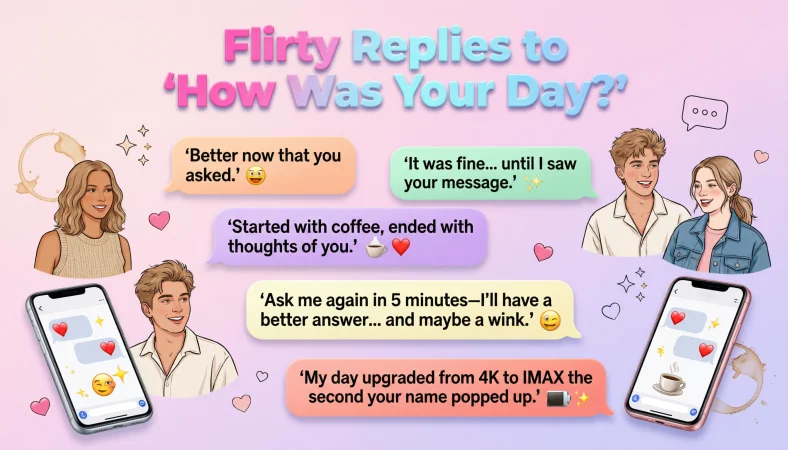
“It got better when you texted me.”
Use it when a crush checks in at the end of the day.
Meaning: You are openly showing that their message matters.
“It was good, but I’d rather tell you in person.”
Use it when you want to create a reason to meet.
Meaning: You are subtly suggesting spending time together.
“Busy, but I somehow had time to think about you.”
Use it when you want a direct romantic hint.
Meaning: They crossed your mind despite a packed schedule.
“Pretty normal until you showed up.”
Use it when you want playful flirtation without being too intense.
Meaning: Their message changed the mood.
“Long day. Your attention is exactly what I needed.”
Use it when you want affectionate evening banter.
Meaning: You enjoy receiving their attention.
“It would’ve been better with you in it.”
Use it when you want to turn an ordinary answer into a romantic compliment.
Meaning: You wish they had been part of your day.
“I’ll tell you everything if you promise to listen.”
Use it when you want to build a more intimate conversation.
Meaning: You want their attention and company.
“Good enough, but I’m definitely accepting cuddles.”
Use it with someone you already share affectionate chemistry with.
Meaning: You are playfully asking for physical affection.
“I survived, handsome.”
Use it when flirting with someone you are comfortable complimenting.
Meaning: You are answering casually while adding romantic energy.
“It was missing one thing. You.”
Use it when you want a short and confident romantic reply.
Meaning: You are saying their presence would have made the day better.
“Ask me again while we’re getting coffee.”
Use it when you want to turn the conversation into a casual date suggestion.
Meaning: You are inviting them to spend time with you.
“It was fine, but I’m more interested in how your voice sounds tonight.”
Use it when texting someone with strong romantic chemistry.
Meaning: You are steering the conversation toward a more personal connection.
Sweet Replies to “How Was Your Day?”
“It was good, thanks for asking.”
Use it when someone kindly checks in.
Meaning: You appreciate their genuine interest.
“A bit tiring, but nothing I couldn’t handle.”
Use it when you want to be honest while staying positive.
Meaning: The day was demanding but manageable.
“It was nice. I got a few things done.”
Use it after a productive day.
Meaning: You feel satisfied with how your time was spent.
“Honestly, pretty peaceful.”
Use it when your day was calm and relaxing.
Meaning: You enjoyed having little stress.
“It was busy, but productive.”
Use it when you accomplished several important things.
Meaning: Your effort paid off.
“A little stressful, but I’m okay now.”
Use it when someone you trust asks about your day.
Meaning: You had difficulties but are feeling better.
“It was better than I expected.”
Use it after something pleasantly surprising happened.
Meaning: The day exceeded your expectations.
“Not perfect, but there were some lovely moments.”
Use it when the day had both good and difficult parts.
Meaning: You are focusing on the positives.
“It was ordinary, which honestly felt nice.”
Use it when you enjoyed having a quiet day.
Meaning: You appreciated a break from drama.
“It was a little hectic, but I’m grateful.”
Use it when you want to acknowledge stress while staying appreciative.
Meaning: You recognize the difficult parts without losing perspective.
“I’m glad you asked.”
Use it when you genuinely want to open up.
Meaning: Their question made you feel comfortable sharing.
“It was okay, and I hope yours was good too.”
Use it when you want a warm and considerate response.
Meaning: You are showing interest in their experience as well.
Sarcastic Replies to “How Was Your Day?”
“Absolutely magical, if you enjoy unnecessary problems.”
Use it after a frustrating day.
Meaning: The day was difficult and you are using humor to describe it.
“Fantastic. My patience left early, though.”
Use it when everything tested your patience.
Meaning: You managed the day but became increasingly irritated.
“Living the dream, unfortunately.”
Use it when the day has been far less enjoyable than expected.
Meaning: You are jokingly saying the opposite of what you mean.
“Ten out of ten, would complain again.”
Use it when venting with a close friend.
Meaning: You are embracing the humor in your bad day.
“Productivity called. I sent it to voicemail.”
Use it when you procrastinated all day.
Meaning: You did not accomplish as much as planned.
“It was peaceful until reality remembered I exist.”
Use it when your day suddenly became stressful.
Meaning: Things went wrong after an initially calm start.
“Just another episode of my daily sitcom.”
Use it when several ridiculous things happened.
Meaning: Your day felt comically chaotic.
“My day was a group project and nobody contributed.”
Use it after a frustrating work or school experience.
Meaning: You felt like you had to handle everything yourself.
“Beautiful. If we ignore everything that happened.”
Use it when joking about a terrible day.
Meaning: Almost everything went wrong.
“It was character development.”
Use it after an embarrassing or challenging experience.
Meaning: You are reframing a difficult moment as a learning experience.
“I’d give you the details, but I need legal representation first.”
Use it when something hilariously complicated happened.
Meaning: You are joking that the story is too dramatic to explain simply.
“My schedule and I are no longer on speaking terms.”
Use it when your plans became overwhelming.
Meaning: You feel completely overwhelmed by your day.
Chill and Casual Replies to “How Was Your Day?”
“Pretty good, honestly.”
Use it for a simple everyday response.
Meaning: You had a generally positive day.
“Not too bad.”
Use it when things were okay but unremarkable.
Meaning: Nothing went seriously wrong.
“It was alright. Just busy.”
Use it after a packed day.
Meaning: You had plenty to do but got through it.
“Same old, same old.”
Use it when nothing unusual happened.
Meaning: Your day followed the usual routine.
“Can’t complain.”
Use it when you are generally satisfied.
Meaning: Things are good enough to avoid complaining.
“Honestly, pretty chill.”
Use it after a relaxed day.
Meaning: You had little stress or pressure.
“A bit hectic, but I’m good.”
Use it when your day was busy but manageable.
Meaning: You experienced some pressure but are okay now.
“It flew by.”
Use it when the day seemed unusually short.
Meaning: You were busy or engaged enough that time passed quickly.
“Slow day, which I actually needed.”
Use it when you appreciated having less to do.
Meaning: A quiet day gave you time to recharge.
“Busy but decent.”
Use it when your schedule was full without being overwhelming.
Meaning: The day went reasonably well.
“Nothing too exciting.”
Use it when your day was uneventful.
Meaning: There is not much news to report.
“All good over here.”
Use it for a relaxed response with friends.
Meaning: Everything is fine on your end.
Confident Replies to “How Was Your Day?”
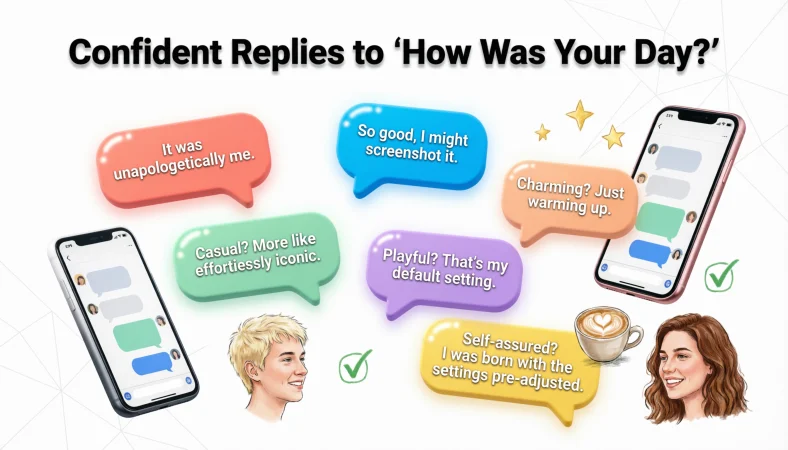
“Productive. I got a lot done.”
Use it after completing important goals.
Meaning: You feel accomplished.
“Honestly, I handled it pretty well.”
Use it after overcoming a challenging day.
Meaning: You are proud of how you managed things.
“Busy, but I stayed on top of everything.”
Use it after a demanding schedule.
Meaning: You managed your responsibilities effectively.
“Pretty great. I made some progress today.”
Use it when you accomplished something meaningful.
Meaning: You are recognizing your own progress.
“Better than yesterday, so I’ll take it.”
Use it when you are improving gradually.
Meaning: You appreciate forward movement.
“A good day. I checked several things off my list.”
Use it after completing tasks.
Meaning: You feel organized and satisfied.
“Challenging, but I learned a lot.”
Use it after a difficult experience.
Meaning: You found value in the challenge.
“Busy, but I made time for myself too.”
Use it when you successfully balanced responsibilities and personal time.
Meaning: You are prioritizing a healthy routine.
“Pretty solid. I’m proud of today.”
Use it after a day where you feel you performed well.
Meaning: You recognize your own effort.
“It went exactly how I needed it to.”
Use it when your day aligned with your goals.
Meaning: You feel satisfied with the outcome.
“I had a few wins today.”
Use it when several small successes happened.
Meaning: You are celebrating positive progress.
“I got through everything I needed to.”
Use it after completing a demanding schedule.
Meaning: You feel capable and accomplished.
Emotional Replies to “How Was Your Day?”
“Honestly, it was a lot.”
Use it when you are not ready to explain every detail.
Meaning: The day felt emotionally heavy.
“I’m okay, but today tested me.”
Use it when you experienced several stressful moments.
Meaning: You struggled but managed to cope.
“It was harder than I expected.”
Use it when something emotionally or mentally difficult happened.
Meaning: The day affected you more than anticipated.
“I could really use someone to talk to.”
Use it when you want emotional support.
Meaning: You are asking for connection and a listening ear.
“Not my best day, if I’m being honest.”
Use it when you want to acknowledge that things went poorly.
Meaning: You are being vulnerable without oversharing.
“I’m still processing everything.”
Use it after an intense experience.
Meaning: You need time to understand your emotions.
“There were some good moments, but it was heavy.”
Use it when your day contained both positives and difficulties.
Meaning: The difficult parts had a strong emotional impact.
“I’m tired in more ways than one.”
Use it when you feel mentally and emotionally drained.
Meaning: Your exhaustion is deeper than physical tiredness.
“Today reminded me to slow down.”
Use it after a stressful or overwhelming experience.
Meaning: You realized you need more balance.
“I’m glad the day is over.”
Use it after an especially difficult day.
Meaning: You are relieved to have reached a calmer moment.
“I had a moment where I really needed someone.”
Use it when you want to open a deeper conversation.
Meaning: You experienced loneliness or emotional difficulty.
“I’m okay now, but I wasn’t earlier.”
Use it when you feel safe enough to share honestly.
Meaning: Your emotional state improved after a difficult moment.
Clever Replies to “How Was Your Day?”
“A mixed review, but the ending is promising.”
Use it when the day started poorly but improved.
Meaning: The overall experience was mixed.
“Efficient enough to call it a win.”
Use it after completing your main responsibilities.
Meaning: You achieved enough to feel satisfied.
“It had highs, lows, and questionable decisions.”
Use it when the day was unpredictable.
Meaning: Several memorable things happened.
“A fascinating experiment in patience.”
Use it after dealing with difficult people or situations.
Meaning: The day tested your ability to stay calm.
“Somewhere between productive and mildly chaotic.”
Use it when your day had both achievements and disorder.
Meaning: You got things done despite distractions.
“I’d summarize it, but the summary needs a summary.”
Use it when too much happened to explain quickly.
Meaning: Your day was unusually eventful.
“It was mostly successful with minor plot errors.”
Use it when things went well but not perfectly.
Meaning: You achieved your goals despite a few mistakes.
“Today had excellent character development.”
Use it after learning something from an experience.
Meaning: The day helped you grow or gain perspective.
“A productive chapter with a questionable ending.”
Use it when the day started strongly but ended awkwardly.
Meaning: The outcome was not exactly what you expected.
“I collected a few wins and several lessons.”
Use it when the day taught you something valuable.
Meaning: You recognize both success and growth.
“It was a surprisingly interesting Tuesday, for once.”
Use it when an ordinary day became unexpectedly memorable.
Meaning: Something unusual happened.
“My day deserves a decent review and a strong cup of tea.”
Use it after a tiring but manageable day.
Meaning: You want to relax while reflecting on everything.
Creative Replies to “How Was Your Day?”
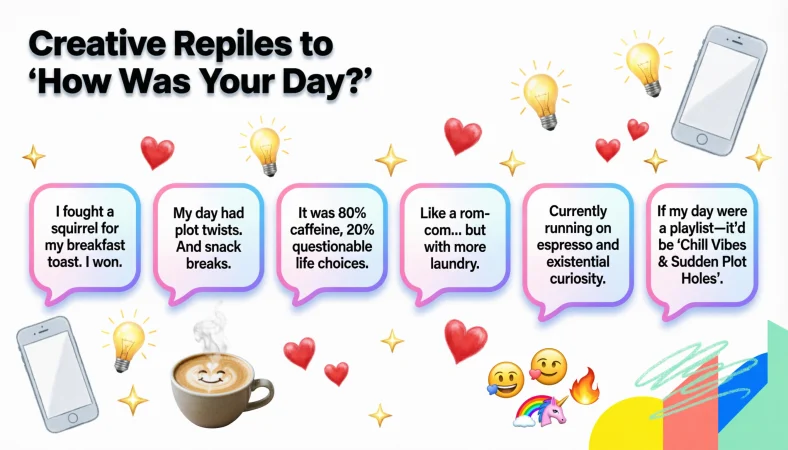
“It started quietly and ended like a season finale.”
Use it when your day became unexpectedly dramatic.
Meaning: Things became much more eventful than expected.
“Today had sunshine, deadlines, and a little chaos.”
Use it when your day contained many different moods.
Meaning: The experience was varied and memorable.
“If today were a movie, I’d give it an interesting rating.”
Use it when something unusual happened.
Meaning: Your day had enough action to be worth discussing.
“It was a playlist of good moments and random stress.”
Use it when your emotions changed throughout the day.
Meaning: The day had several contrasting moods.
“A small adventure disguised as an ordinary day.”
Use it when something unexpectedly exciting happened.
Meaning: The day became more memorable than planned.
“Today brought coffee, chaos, and character development.”
Use it when you want a playful summary.
Meaning: You experienced both stress and personal growth.
“It was a little messy, but the story is good.”
Use it when something complicated happened.
Meaning: The experience was difficult but entertaining in hindsight.
“My day had more twists than my weekend plans.”
Use it when unexpected changes kept happening.
Meaning: Your schedule did not go according to plan.
“A colorful mix of deadlines and tiny victories.”
Use it after a busy but rewarding day.
Meaning: You had pressure but also moments of success.
“Today definitely had a personality.”
Use it when the day felt unusually eventful.
Meaning: Something about the day made it stand out.
“It was ordinary until it decided not to be.”
Use it when an unexpected event changed everything.
Meaning: Your day took an unplanned turn.
“I could write a short story about it.”
Use it when many memorable things happened.
Meaning: There is plenty to discuss.
Short Replies to “How Was Your Day?”
“Good, thanks!”
Use it when you want a quick and friendly answer.
Meaning: Your day went well.
“Pretty good.”
Use it for a simple positive response.
Meaning: You had a decent day.
“Not bad!”
Use it when things were generally okay.
Meaning: Nothing major went wrong.
“Busy, but good.”
Use it after a packed schedule.
Meaning: You were occupied but satisfied.
“Long, honestly.”
Use it when the day felt exhausting.
Meaning: You experienced a tiring stretch of time.
“Really productive.”
Use it when you accomplished a lot.
Meaning: You feel good about what you achieved.
“A little rough.”
Use it when things were difficult.
Meaning: The day did not go smoothly.
“Pretty chill.”
Use it after a relaxed day.
Meaning: You experienced little stress.
“Eventful!”
Use it when several interesting things happened.
Meaning: Your day was memorable.
“Could’ve been better.”
Use it when you are mildly disappointed.
Meaning: The day did not meet your expectations.
“Actually great.”
Use it when something made the day especially enjoyable.
Meaning: You had a genuinely positive experience.
“I survived.”
Use it when humor fits your mood.
Meaning: The day was tiring or challenging.
Romantic Replies to “How Was Your Day?”
“It was good, but I missed you.”
Use it when talking to a partner after being apart.
Meaning: You enjoyed your day but wished they were there.
“Busy, but you crossed my mind a lot.”
Use it when you want to express affection naturally.
Meaning: You thought about them throughout the day.
“Better now that I get to talk to you.”
Use it during an evening conversation with someone special.
Meaning: Their presence improves your mood.
“It was okay. I’m saving the good part for you.”
Use it when you want to create playful anticipation.
Meaning: You have something special to share with them.
“Honestly, I just wanted to come home and talk to you.”
Use it when your partner checks in after a long day.
Meaning: Talking to them is comforting.
“It was long, but hearing from you helps.”
Use it when you need a little emotional warmth.
Meaning: Their message makes your evening better.
“I kept thinking about what we’re doing this weekend.”
Use it when you are excited about upcoming plans together.
Meaning: You are looking forward to spending time with them.
“It was fine, but I’d rather hear about your day.”
Use it when you want to focus attention on someone you care about.
Meaning: Their experience matters to you.
“It was good. You were definitely the highlight of my evening.”
Use it when someone messages you after a busy day.
Meaning: Their attention is especially meaningful.
“A little tiring, so I’m claiming your attention tonight.”
Use it for playful relationship banter.
Meaning: You want affection and connection.
“It was ordinary, but thinking about you made it sweeter.”
Use it when you want a gentle romantic compliment.
Meaning: Thoughts of them made your day more enjoyable.
“It was long, but I knew I’d get to talk to you afterward.”
Use it when you want to express emotional comfort.
Meaning: Knowing they would be there helped you get through the day.
Professional Replies to “How Was Your Day?”
“It went well, thank you. I made good progress on my priorities.”
Use it when a colleague asks about your workday.
Meaning: You are giving a positive and professional update.
“Busy, but productive.”
Use it during workplace small talk.
Meaning: Your schedule was full but worthwhile.
“It was a productive day overall.”
Use it when speaking with a manager or coworker.
Meaning: You completed useful work.
“Quite busy, but everything stayed on track.”
Use it when your workload was demanding.
Meaning: You handled the pressure effectively.
“Good, thanks. I managed to finish several key tasks.”
Use it after completing important assignments.
Meaning: You are highlighting tangible progress.
“A little hectic, but we got through it.”
Use it when your team had a challenging day.
Meaning: The work was difficult but successfully handled.
“It went smoothly for the most part.”
Use it when there were only minor issues.
Meaning: The overall workday was positive.
“It was productive, and I learned something new.”
Use it after gaining useful experience.
Meaning: You value both results and development.
“Quite full, but I’m happy with the outcome.”
Use it when you had a busy schedule with a positive result.
Meaning: Your effort produced a satisfying outcome.
“It was a good day for getting things done.”
Use it during casual workplace conversation.
Meaning: You made meaningful progress.
“A little challenging, but we handled the main priorities.”
Use it when work presented unexpected difficulties.
Meaning: You remained focused despite obstacles.
“Good overall. I’m looking forward to a quiet evening.”
Use it after a demanding professional day.
Meaning: Work went well and you are ready to relax.
Playful Replies to “How Was Your Day?”
“Would you like the family-friendly version or the full documentary?”
Use it when plenty of funny things happened.
Meaning: You have a lot to share.
“Ask carefully. I have receipts.”
Use it when your day involved memorable events.
Meaning: You are ready to tell the whole story.
“It was an emotional roller coaster with no seatbelt.”
Use it after an unpredictable day.
Meaning: Your emotions went through several ups and downs.
“Honestly, my day had main-character energy.”
Use it after something memorable happened.
Meaning: You felt unusually involved in interesting events.
“It was giving productivity with a side of nonsense.”
Use it when you accomplished things while dealing with distractions.
Meaning: Your day was productive but also amusingly chaotic.
“I have notes.”
Use it when you want to tease someone about a long story.
Meaning: There is plenty to explain.
“Let’s just say my patience earned overtime.”
Use it after dealing with difficult situations.
Meaning: You had to work hard to stay patient.
“Today was sponsored by caffeine and poor decisions.”
Use it with close friends after a hectic day.
Meaning: Coffee and questionable choices helped you get through it.
“It had everything except a soundtrack.”
Use it when your day felt unusually dramatic.
Meaning: Many memorable things happened.
“I laughed, I sighed, I questioned everything.”
Use it after a day full of emotional changes.
Meaning: Your day was unpredictable and intense.
“It deserves its own group chat.”
Use it when there is a lot of gossip or drama to share.
Meaning: The story is too good for a short summary.
“Honestly, you should probably sit down for this one.”
Use it when you have an unusually interesting story.
Meaning: You expect the details to be entertaining.
Flirty and Playful Replies to “How Was Your Day?”
“It was fine until I realized you hadn’t texted me yet.”
Use it when you want to tease someone you like.
Meaning: You noticed their absence and missed their attention.
“Busy day, cute ending.”
Use it after receiving a message from someone attractive.
Meaning: Their message improved your evening.
“It was missing a little flirting.”
Use it when you want to invite playful banter.
Meaning: You are encouraging them to flirt with you.
“Pretty good. Want to make the evening better?”
Use it when the chemistry is already obvious.
Meaning: You are inviting more interaction.
“Long day. Distract me?”
Use it when you want their attention.
Meaning: You are playfully asking them to cheer you up.
“It was okay, but I could use some of your attention.”
Use it with someone you are comfortable flirting with.
Meaning: You want their focus and affection.
“I survived, but I’m open to a cute rescue plan.”
Use it when suggesting a date or call.
Meaning: You are inviting them to spend time with you.
“It was decent. Your message just upgraded it.”
Use it when their text arrives after work or school.
Meaning: Their attention immediately improves your mood.
“I’ll rate it higher if you’re part of my evening.”
Use it when you want to hint at spending time together.
Meaning: You want them included in your plans.
“Good enough, but I’m still waiting for the fun part.”
Use it when you want to create playful tension.
Meaning: You are suggesting the evening could become more exciting.
“It was long. Luckily, you’re a nice distraction.”
Use it with someone you already flirt with.
Meaning: Their presence helps you forget about the stressful day.
“Honestly, I was hoping you’d ask.”
Use it when you want to show that you enjoy their attention.
Meaning: You were looking forward to hearing from them.
Replies for a Bad Day
“Honestly, not great, but I’ll be okay.”
Use it when you want to be truthful without sounding hopeless.
Meaning: The day was difficult, but you remain hopeful.
“It was rough. I could use some cheering up.”
Use it with someone supportive.
Meaning: You are asking for emotional encouragement.
“Definitely not my favorite day.”
Use it when you want a gentle way to describe disappointment.
Meaning: The day went poorly.
“I had better days.”
Use it when you want a short, understated response.
Meaning: You are not happy with how things went.
“A little overwhelming, honestly.”
Use it when too many things happened at once.
Meaning: You felt mentally overloaded.
“It tested my patience today.”
Use it after dealing with frustrating situations.
Meaning: Several things irritated or challenged you.
“Not terrible, just exhausting.”
Use it when the main issue was fatigue.
Meaning: Nothing catastrophic happened, but you are drained.
“It was one of those days.”
Use it when you do not want to explain everything immediately.
Meaning: The day was difficult in a way that feels familiar.
“I’m glad it’s over.”
Use it after an especially stressful day.
Meaning: You are relieved to move past it.
“I could definitely use a reset.”
Use it when the day left you mentally tired.
Meaning: You need time to recover.
“It was rough, but I learned something from it.”
Use it when you want to focus on growth.
Meaning: You found a positive lesson in a difficult experience.
“Not my best day, but tomorrow is another chance.”
Use it when you want an optimistic ending.
Meaning: You are choosing to move forward.
Replies for a Great Day
“Honestly, it was amazing!”
Use it when you had an exceptionally good day.
Meaning: You are genuinely excited about how things went.
“So good! I actually had a great time.”
Use it when you enjoyed yourself.
Meaning: The day left you feeling happy.
“Better than I expected.”
Use it after an unexpectedly positive experience.
Meaning: Something exceeded your expectations.
“Really productive and surprisingly fun.”
Use it after a day that balanced work and enjoyment.
Meaning: You accomplished things while having a good time.
“It was one of those rare perfect days.”
Use it when almost everything went right.
Meaning: You feel unusually satisfied.
“Fantastic. I have so much to tell you.”
Use it when you want to share exciting details.
Meaning: Your day gave you plenty of positive stories.
“I had some really good news today.”
Use it when something important went your way.
Meaning: A positive event made your day special.
“Honestly, I’m still smiling.”
Use it after something especially enjoyable.
Meaning: The good mood has stayed with you.
“Today was a win.”
Use it after accomplishing something meaningful.
Meaning: You feel successful.
“It exceeded expectations.”
Use it when things turned out particularly well.
Meaning: The day was better than you planned.
“Really good. I needed a day like this.”
Use it after a positive break from stress.
Meaning: The experience gave you emotional relief.
“It was great, and I’m ending it on a happy note.”
Use it when the evening feels especially positive.
Meaning: You are carrying the good mood into the night.
Replies That Keep the Conversation Going
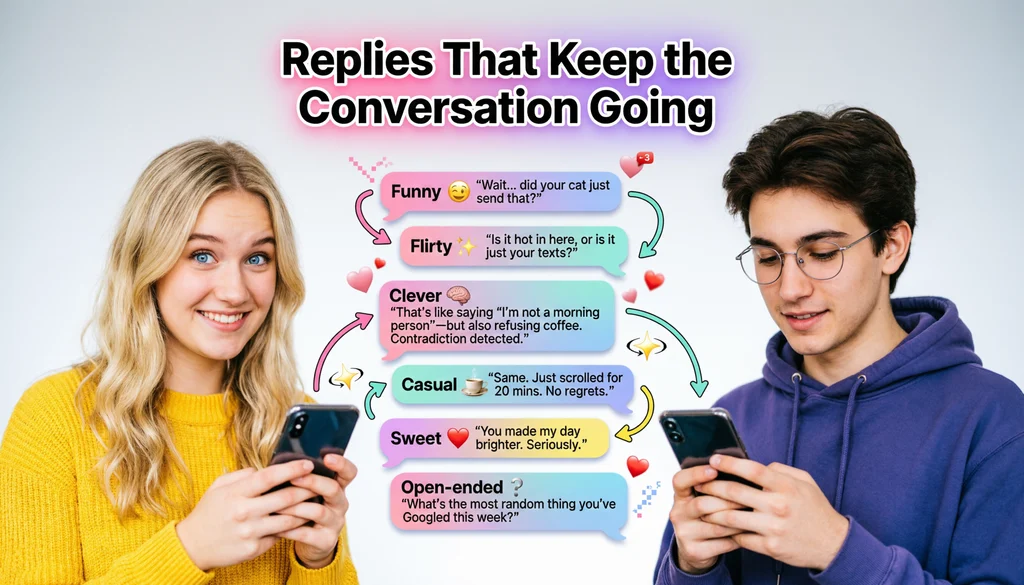
“Pretty good! What was the best part of your day?”
Use it when you want the other person to open up.
Meaning: You are showing genuine interest in their experience.
“It was busy. Want the short version or the full story?”
Use it when several things happened.
Meaning: You are giving them an easy way to continue the conversation.
“A little hectic, but I have a funny story.”
Use it when something amusing happened.
Meaning: You are offering a natural conversation hook.
“It was okay. What about you?”
Use it for everyday conversations.
Meaning: You are answering while returning the question.
“Good overall. What did you get up to today?”
Use it when talking with a friend or crush.
Meaning: You want to hear about their day too.
“Long day, but there was one really interesting moment.”
Use it when you want to create curiosity.
Meaning: You are giving them a reason to ask for details.
“It was decent. What made you ask?”
Use it when you are curious about their interest.
Meaning: You want to understand why they checked in.
“Pretty good. Tell me one thing that made you smile today.”
Use it with someone you want to connect with.
Meaning: You are encouraging a positive and personal conversation.
“Busy, but I’m finally free. What are you doing tonight?”
Use it when you want to continue chatting in the evening.
Meaning: You are opening the door to more interaction.
“It was interesting. I’ll tell you if you tell me yours.”
Use it when you want a playful exchange.
Meaning: You are turning the conversation into a mutual sharing moment.
“Not bad. Did anything exciting happen on your side?”
Use it when you want more than small talk.
Meaning: You are inviting them to share something meaningful.
“I could tell you about my day, but first I want to hear about yours.”
Use it when you genuinely care about the other person.
Meaning: You are putting their experience first.
Replies When You Want to Open Up
“Honestly, I’ve had a lot on my mind today.”
Use it when you want to start a deeper conversation.
Meaning: You are signaling that something is bothering you.
“It was okay, but there’s something I want to talk about.”
Use it with someone you trust.
Meaning: You are preparing to share something personal.
“I’m glad you asked because today was a lot.”
Use it when you need someone to listen.
Meaning: Their question gives you an opening to be vulnerable.
“I’ve been better, but talking might help.”
Use it when you need emotional support.
Meaning: You are gently asking for companionship.
“There’s actually something that happened today.”
Use it when you want to tell an important story.
Meaning: You are opening the door to a deeper discussion.
“It was complicated, honestly.”
Use it when your feelings are difficult to summarize.
Meaning: The day involved mixed emotions or circumstances.
“I’m still trying to figure out how I feel about it.”
Use it after an emotionally confusing experience.
Meaning: You need time and possibly support to process it.
“Today made me think about a few things.”
Use it when you want to discuss something meaningful.
Meaning: The day gave you new thoughts or perspective.
“I don’t really know how to explain it yet.”
Use it when your feelings are still unclear.
Meaning: You want to share but need patience.
“It was difficult, but I think I needed the lesson.”
Use it after a challenging personal experience.
Meaning: You are trying to find growth in difficulty.
“I could use a good listener tonight.”
Use it when you want someone to be emotionally present.
Meaning: You are directly asking for support.
“There were some things I wish had gone differently.”
Use it when reflecting on disappointment.
Meaning: You are ready to discuss what went wrong.
Warm and Thoughtful Replies to “How Was Your Day?”
“It was good, and I’m grateful for the little things.”
Use it after a peaceful or meaningful day.
Meaning: You are appreciating small positive moments.
“A little busy, but I found time to enjoy myself.”
Use it when you balanced responsibilities and relaxation.
Meaning: You made space for yourself despite being busy.
“It was tiring, but I’m grateful I got everything done.”
Use it after completing a demanding schedule.
Meaning: You recognize your effort and progress.
“Honestly, it was better because of a few kind people.”
Use it when someone’s kindness affected your day.
Meaning: Positive interactions made the experience better.
“It reminded me not to take the simple moments for granted.”
Use it after a reflective day.
Meaning: You found value in ordinary experiences.
“There were challenges, but there were beautiful moments too.”
Use it when your day had mixed emotions.
Meaning: You are acknowledging both difficulties and positives.
“I’m ending the day feeling pretty thankful.”
Use it after something meaningful happened.
Meaning: You feel appreciative as the day closes.
“It was peaceful, and I really needed that.”
Use it after a calm day.
Meaning: You benefited from having less pressure.
“I got through a lot today, and that feels good.”
Use it after accomplishing difficult tasks.
Meaning: You are proud of your progress.
“It was simple, but sometimes simple is exactly what you need.”
Use it after an uneventful but comforting day.
Meaning: You appreciate peace over excitement.
“I had a few moments that genuinely made me smile.”
Use it when small joys stood out.
Meaning: Positive moments made the day worthwhile.
“I’m tired, but my heart feels pretty full.”
Use it after a meaningful day with loved ones.
Meaning: You are physically tired but emotionally happy.
FAQs
What Does “How Was Your Day?” Mean?
It usually means someone wants to know how your day went. Depending on the relationship, it can be simple small talk, genuine concern, or an invitation to have a deeper conversation.
What Is a Good Reply to “How Was Your Day?”
A good reply depends on your mood. Try “Pretty good, thanks for asking,” “It was a long one,” “Honestly, I have a funny story,” or “Better now that I’m talking to you.”
What Should I Say If I Had a Bad Day?
You can be honest without oversharing. Try “It was rough, but I’m okay,” “I’ve had better days,” or “I could really use someone to talk to.”
How Do I Reply to “How Was Your Day?” From a Crush?
Add warmth or light flirting. “It got better when you texted me,” “It would’ve been better with you in it,” or “Busy, but I somehow had time to think about you” can work well.
What Is a Sweet Reply to “How Was Your Day?”
Try “It was good, and I’m glad you asked,” or “A little tiring, but hearing from you makes it better.” These responses show appreciation and warmth.
What Is a Funny Reply to “How Was Your Day?”
Try “Survived. That’s the headline,” “It had plot twists,” or “My brain has officially left the chat.” Humor works especially well with close friends.
How Do I Keep the Conversation Going?
Avoid one-word answers and add a question or detail. You can say, “It was busy, but I have a funny story. How was yours?” This gives the other person something to respond to.
Can I Use These Replies at Work?
Yes, but choose professional wording. “Busy, but productive,” “It went well, thank you,” and “Quite hectic, but everything stayed on track” are safe workplace choices.
What If I Don’t Want to Talk About My Day?
Keep your answer brief and redirect the conversation. Try “It was okay, thanks. How was yours?” This politely moves the focus without creating an awkward moment.
Can “How Was Your Day?” Be Flirty?
Absolutely. The phrase itself is usually neutral, but the context can become flirty depending on the relationship and tone. A reply like “Better now that you’re here” adds a clear romantic hint.
Conclusion
The best replies to “how was your day?” do more than answer a basic question. They show personality, invite conversation, and can even turn an ordinary evening text into something memorable. Whether you want to be funny, flirty, sweet, professional, thoughtful, or simply honest, there is a response for almost every mood. You do not need a perfect story either.
Sometimes “It was long, but I’m glad you asked” is enough to open the door to a meaningful conversation. Try different replies depending on who is asking and what you actually feel. Save this list for your next text, share it with a friend, and never let “good” be your only answer again.