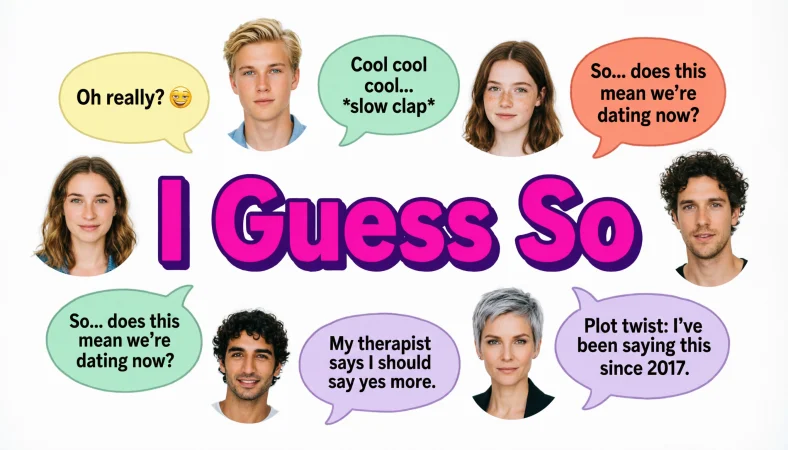
The best replies to “I guess so” keep things open instead of letting the conversation die with a dry “okay.” Try playful, curious, or slightly flirty responses that give the other person something easy to answer.
Top alternatives: “What makes you say that?”, “So that’s a yes-ish?”, “You sound unconvinced 😂”, “Tell me more”, “Okay, but what do you really think?”
Sometimes a conversation is flowing beautifully, and then someone drops two tiny words that hit the brakes: “I guess so.” Suddenly, you’re staring at your screen wondering whether to continue, change the subject, or dramatically retire from texting forever. Knowing the best replies to “I guess so” that keep chat going can save the conversation from becoming another graveyard of “lol,” “yeah,” and “okay.”
Whether you’re texting a friend, talking to a crush, replying in DMs, or chatting with someone from work, your response can completely change the energy. “I guess so” can mean uncertainty, agreement, hesitation, indifference, or simply someone being casual. The trick is responding without making things awkward. A clever question can create curiosity, while a funny comeback can bring the vibe back to life. Here are plenty of text-ready options for every mood.
Funny Responses
“So that’s a yes wearing a disguise?”
Use this when their answer sounds suspiciously like agreement.
Meaning: You’re playfully teasing their hesitation.
“I guess so? Wow, such confidence 😂”
Use this when their uncertain answer deserves a little friendly roasting.
Meaning: You’re joking about how unconvincing they sound.
“Should I celebrate or remain emotionally prepared?”
Use this when you want to make their vague answer funny.
Meaning: You’re asking for clarity in a playful way.
“That was the most enthusiastic ‘yes’ ever.”
Use this when they sound completely unexcited.
Meaning: You’re teasing their lack of enthusiasm.
“I’ll take that as a 51% yes.”
Use this when their answer feels barely positive.
Meaning: You’re humorously measuring their uncertainty.
“Okay, Mr. Definitely Maybe.”
Use this with someone who constantly gives vague answers.
Meaning: You’re joking about their indecisiveness.
“Your confidence is absolutely inspiring.”
Use this when their “I guess so” is hilariously unsure.
Meaning: You’re using playful sarcasm to keep things light.
“That answer needs a confidence upgrade.”
Use this when you want to tease without sounding harsh.
Meaning: You’re encouraging them to be more decisive.
“I heard the hesitation from here.”
Use this when their uncertainty is obvious.
Meaning: You noticed they are not fully convinced.
“I guess so has entered the chat.”
Use this when you want a meme-style response.
Meaning: You’re turning their phrase into the joke.
“That sounded like a yes with trust issues.”
Use this when they agree but still seem doubtful.
Meaning: You’re joking about their hesitation.
“Let me know when the confidence arrives.”
Use this when their response is extremely uncertain.
Meaning: You’re playfully challenging their indecision.
“Should I ask again after your brain finishes loading?”
Use this with a close friend who is slow to answer.
Meaning: You’re teasing them affectionately.
“I guess so is doing some heavy lifting today.”
Use this when their entire answer depends on those three words.
Meaning: You’re humorously pointing out how vague they are.
“That answer came with absolutely zero commitment 😂”
Use this when they refuse to sound certain.
Meaning: You’re playfully calling out their lack of confidence.
Flirty Responses
“You guess so? I might need to convince you.”
Use this when there is already playful chemistry.
Meaning: You’re turning their hesitation into flirtation.
“I like making people change their minds.”
Use this when you want to create a teasing challenge.
Meaning: You’re confidently inviting playful interaction.
“That sounds like a yes I can work with.”
Use this when their uncertainty feels cute rather than negative.
Meaning: You’re treating their answer as an opening.
“You’re cute when you’re unsure.”
Use this when you want a soft compliment.
Meaning: You’re showing attraction while keeping things light.
“I’ll take that as permission to keep flirting.”
Use this when the conversation already has romantic energy.
Meaning: You’re playfully escalating the flirtation.
“Hmm, I think I can get a better answer out of you.”
Use this when you want to keep them engaged.
Meaning: You’re teasing them into saying more.
“Was that hesitation because you’re shy?”
Use this when their answer feels adorably uncertain.
Meaning: You’re suggesting their hesitation might come from attraction.
“I guess so? You’re making this too easy.”
Use this when you want a confident, playful comeback.
Meaning: You’re turning their vague response into flirting.
“Careful, I might take that as a green light.”
Use this when their answer could reasonably be interpreted positively.
Meaning: You’re teasing them about giving you an opening.
“You can say yes, I promise I won’t blush.”
Use this when you want a cute flirt.
Meaning: You’re encouraging them to be more direct.
“That sounded suspiciously cute.”
Use this when their uncertainty makes the exchange playful.
Meaning: You’re complimenting their manner without being too intense.
“I’ll accept your almost-yes for now.”
Use this when you want to keep a playful rhythm.
Meaning: You’re teasing them about their indecision.
“You’re really making me work for that answer.”
Use this when you want to build playful tension.
Meaning: You’re enjoying their hesitation.
“I have a feeling you mean yes.”
Use this when their tone suggests hidden agreement.
Meaning: You’re playfully reading between the lines.
“Just admit you’re curious about me.”
Use this when the conversation has obvious chemistry.
Meaning: You’re confidently teasing them about their interest.
Sarcastic Responses
“Wow, what a decisive answer.”
Use this when their response is anything but decisive.
Meaning: You’re lightly mocking their uncertainty.
“I’ll alert the newspapers.”
Use this when they finally give you a tiny bit of agreement.
Meaning: You’re exaggerating their answer for humor.
“Thank you for your groundbreaking analysis.”
Use this when they respond with minimal effort.
Meaning: You’re playfully calling out their vague reply.
“Very convincing. Ten out of ten.”
Use this when you clearly are not convinced.
Meaning: You’re using irony to tease them.
“Your enthusiasm is overwhelming.”
Use this when they sound completely unenthusiastic.
Meaning: You’re joking about their lack of excitement.
“I can practically feel the certainty.”
Use this when their answer is obviously uncertain.
Meaning: You’re sarcastically highlighting the opposite.
“Strong argument. I’m sold.”
Use this when they provide no real explanation.
Meaning: You’re joking about their weak response.
“And they said romance was dead.”
Use this when their dry response is funny in context.
Meaning: You’re exaggerating the situation for comedic effect.
“Beautifully vague. Truly inspiring.”
Use this when they refuse to be specific.
Meaning: You’re playfully criticizing their ambiguity.
“I’ll add that to the official record.”
Use this when their answer is hilariously noncommittal.
Meaning: You’re treating their vague reply as something important.
“That clears up absolutely nothing.”
Use this when you genuinely need more information.
Meaning: You’re asking them to explain themselves.
“Glad we reached absolutely no conclusion.”
Use this when the conversation has gone nowhere.
Meaning: You’re humorously acknowledging the ambiguity.
“You really said everything without saying anything.”
Use this when their answer is extremely vague.
Meaning: You’re pointing out the lack of useful information.
“I’ll pretend that was an answer.”
Use this when you want to tease them.
Meaning: You’re playfully challenging their response.
“Noted: uncertainty levels remain dangerously high.”
Use this when you want a dramatic sarcastic joke.
Meaning: You’re exaggerating their indecision.
Cute Responses
“Aww, you’re not sure?”
Use this when you want to sound warm and curious.
Meaning: You’re gently inviting them to explain.
“That little ‘I guess’ is kinda adorable.”
Use this when their hesitation feels endearing.
Meaning: You’re turning uncertainty into a compliment.
“Okay, I’ll give you time to decide.”
Use this when you want to be patient and playful.
Meaning: You’re showing that there is no pressure.
“You sound so unsure, bless you 😂”
Use this with someone you know well.
Meaning: You’re teasing them affectionately.
“Tell me what your heart actually says.”
Use this when the topic is personal.
Meaning: You’re encouraging an honest answer.
“You can be honest with me.”
Use this when they seem reluctant to share their opinion.
Meaning: You’re creating a comfortable opening.
“I know there’s more behind that answer.”
Use this when you sense they are holding something back.
Meaning: You’re inviting them to elaborate.
“No pressure, I’m listening.”
Use this when you want to reassure them.
Meaning: You’re showing patience and openness.
“That was a very tiny answer.”
Use this when you want more conversation without sounding demanding.
Meaning: You’re gently asking them to expand.
“Okayyy, I hear you.”
Use this when you want a relaxed, affectionate response.
Meaning: You’re acknowledging them without pushing.
“You’re allowed to think out loud.”
Use this when someone seems unsure about what they feel.
Meaning: You’re encouraging honest communication.
“I’ll wait for the deluxe version of that answer.”
Use this when their reply is too short.
Meaning: You’re jokingly asking for more detail.
“That answer needs a little more context.”
Use this when you genuinely want to understand.
Meaning: You’re inviting them to explain.
“I’m curious what made you say that.”
Use this when their response catches your attention.
Meaning: You want to understand their reasoning.
“Okay, but I want the real answer.”
Use this when you suspect they are holding back.
Meaning: You’re asking for sincerity in a friendly way.
Clever Responses
“Interesting. What’s making you hesitate?”
Use this when you want to move beyond a surface-level reply.
Meaning: You’re asking for the reason behind their uncertainty.
“So, what would turn that guess into a yes?”
Use this when there is room for playful discussion.
Meaning: You’re asking what would change their mind.
“Let’s unpack that little ‘I guess.’”
Use this when their wording seems meaningful.
Meaning: You’re encouraging them to elaborate.
“That sounds like there’s a story behind it.”
Use this when you think they have more to say.
Meaning: You’re inviting them to share context.
“What percentage confident are we?”
Use this when you want a humorous way to seek clarity.
Meaning: You’re asking how certain they really are.
“What would make you more certain?”
Use this when you want a thoughtful answer.
Meaning: You’re encouraging them to explain their hesitation.
“I’m hearing uncertainty. Am I wrong?”
Use this when their tone feels hesitant.
Meaning: You’re checking whether you understood them correctly.
“That sounds like a maybe pretending to be a yes.”
Use this when their agreement seems weak.
Meaning: You’re humorously identifying their uncertainty.
“What’s the thought behind the guess?”
Use this when you want them to elaborate.
Meaning: You’re asking for their actual reasoning.
“Okay, now I’m curious.”
Use this when their answer makes you want more information.
Meaning: You’re creating an easy opening for further conversation.
“I’ll bite. Why ‘I guess so’?”
Use this when you want a direct but casual question.
Meaning: You’re asking them to explain the wording.
“That answer just raised three more questions.”
Use this when their response creates more curiosity.
Meaning: You’re signaling that you want to keep talking.
“You’ve successfully made me curious.”
Use this when you want them to continue.
Meaning: You’re rewarding their mysterious answer with attention.
“Okay, now give me the director’s cut.”
Use this when their answer needs more detail.
Meaning: You’re playfully requesting the full story.
“I feel like there’s a better answer hiding in there.”
Use this when they seem reluctant to say what they really think.
Meaning: You’re inviting honesty without being pushy.
Chill And Casual Responses
“Fair enough 😂”
Use this when you want to acknowledge them without pressure.
Meaning: You’re keeping the conversation relaxed.
“Haha, I get you.”
Use this when their uncertainty is understandable.
Meaning: You’re showing casual understanding.
“Yeah, that makes sense.”
Use this when you genuinely understand their position.
Meaning: You’re validating their response.
“I hear you.”
Use this when you want to keep things easygoing.
Meaning: You’re acknowledging what they said.
“Totally fair.”
Use this when their answer is reasonable.
Meaning: You’re accepting their perspective.
“No worries, I get it.”
Use this when you don’t want them to feel pressured.
Meaning: You’re reassuring them.
“Haha, okay then.”
Use this when you want a simple casual reply.
Meaning: You’re keeping the mood light.
“Alright, I’ll take it.”
Use this when their answer is good enough for now.
Meaning: You’re accepting their response playfully.
“Gotcha.”
Use this when you want something short and natural.
Meaning: You’re simply acknowledging them.
“Makes sense to me.”
Use this when you agree with their reasoning.
Meaning: You’re showing easy acceptance.
“Okay, I can work with that.”
Use this when you want to move the conversation forward.
Meaning: You’re accepting their answer without dwelling on it.
“Cool, cool.”
Use this when you want relaxed texting energy.
Meaning: You’re acknowledging them casually.
“I’ll allow it.”
Use this when you want a playful response.
Meaning: You’re jokingly giving approval.
“Alright, mystery person.”
Use this when they are being vague in a fun way.
Meaning: You’re lightly teasing their mysterious answer.
“Okay, we’ll go with that.”
Use this when you want to move on naturally.
Meaning: You’re accepting their response and keeping momentum.
Confident Responses
“I’ll take that as a yes.”
Use this when their answer is leaning positive.
Meaning: You’re confidently interpreting their hesitation.
“I knew you’d agree eventually.”
Use this when you want playful confidence.
Meaning: You’re joking as though their agreement was inevitable.
“That’s all I needed to hear.”
Use this when you want to sound decisive.
Meaning: You’re confidently moving forward.
“Good enough for me.”
Use this when you do not need further clarification.
Meaning: You’re comfortable with their answer.
“I can work with a maybe.”
Use this when you want to keep things open.
Meaning: You’re confident enough not to need certainty.
“I’ll consider that a win.”
Use this when their response is slightly positive.
Meaning: You’re turning uncertainty into playful optimism.
“I like your answer, even with the hesitation.”
Use this when you want to acknowledge the uncertainty confidently.
Meaning: You’re showing that their hesitation doesn’t bother you.
“You don’t have to be so careful around me.”
Use this when someone seems overly cautious.
Meaning: You’re encouraging them to be more direct.
“You can just tell me what you think.”
Use this when you want straightforward communication.
Meaning: You’re confidently inviting honesty.
“I can handle the real answer.”
Use this when someone seems afraid to be honest.
Meaning: You’re showing emotional confidence.
“Don’t overthink it.”
Use this when their hesitation seems unnecessary.
Meaning: You’re encouraging a simpler response.
“Say what you mean.”
Use this when you want directness.
Meaning: You’re asking them to communicate clearly.
“I respect the honesty.”
Use this when you appreciate their uncertainty.
Meaning: You’re rewarding openness rather than demanding agreement.
“No need to force a yes.”
Use this when you want to remove pressure.
Meaning: You’re showing confidence and respect.
“Take your time, I’m not going anywhere.”
Use this when the conversation allows patience.
Meaning: You’re showing calm confidence.
Creative Responses
“That ‘I guess’ has entered its mysterious era.”
Use this when you want a playful, modern response.
Meaning: You’re making their uncertainty sound entertaining.
“Your answer just unlocked a side quest.”
Use this when their response creates another topic.
Meaning: You’re joking that there is more to explore.
“We have officially entered Maybeville.”
Use this when they refuse to commit.
Meaning: You’re turning their uncertainty into a fictional place.
“I’m sensing a plot twist.”
Use this when you think there is more behind their answer.
Meaning: You’re expressing curiosity about what comes next.
“That answer has layers.”
Use this when their response seems deeper than it looks.
Meaning: You’re suggesting there is more meaning underneath.
“The council will review your answer.”
Use this when you want a dramatic joke.
Meaning: You’re pretending their response needs official approval.
“Your ‘I guess’ deserves its own documentary.”
Use this when their hesitation is especially funny.
Meaning: You’re exaggerating the importance of their answer.
“I’ll put that under ‘to be determined.’”
Use this when they are clearly undecided.
Meaning: You’re playfully accepting the uncertainty.
“Interesting choice of words, detective.”
Use this when their wording makes you curious.
Meaning: You’re teasing them while asking them to explain.
“That answer just gave me main-character curiosity.”
Use this when you want to keep the exchange lively.
Meaning: You’re saying their answer made you want more details.
“I smell a hidden opinion.”
Use this when they seem to be holding back.
Meaning: You suspect they have a stronger opinion than they shared.
“The plot thickens.”
Use this when their response adds uncertainty.
Meaning: You’re playfully making the situation more dramatic.
“Okay, mysterious oracle.”
Use this when they give an unclear prediction or opinion.
Meaning: You’re teasing them for sounding cryptic.
“That answer needs a sequel.”
Use this when you want them to continue explaining.
Meaning: You’re inviting more information.
“And now I need the lore.”
Use this when their answer seems connected to a bigger story.
Meaning: You’re asking for the backstory in a fun way.
Dramatic Responses
“I knew this moment would come.”
Use this when you want to exaggerate their simple answer.
Meaning: You’re turning an ordinary moment into comedy.
“After everything we’ve been through, you give me ‘I guess so’?”
Use this with someone close enough to appreciate dramatic teasing.
Meaning: You’re humorously acting betrayed.
“My heart may never recover.”
Use this when their answer is hilariously underwhelming.
Meaning: You’re exaggerating your reaction for fun.
“This uncertainty is destroying me.”
Use this when you want an over-the-top response.
Meaning: You’re joking about their hesitation.
“I need a moment to process this revelation.”
Use this when their answer is ridiculously simple.
Meaning: You’re pretending their response is monumental.
“Everything has changed.”
Use this when you want maximum dramatic effect.
Meaning: You’re playfully exaggerating the situation.
“I was not emotionally prepared for that.”
Use this when their answer surprises you.
Meaning: You’re humorously acting shocked.
“My entire worldview has shifted.”
Use this when their answer is unexpectedly vague.
Meaning: You’re exaggerating its importance.
“This is not how I imagined today going.”
Use this when you want dramatic humor.
Meaning: You’re pretending their reply has disrupted your life.
“I need to sit down after that.”
Use this when their response is funny or surprising.
Meaning: You’re playfully overstating your reaction.
“The suspense is actually criminal.”
Use this when they refuse to clarify.
Meaning: You’re joking about the tension.
“You really left me on a cliffhanger.”
Use this when their answer creates uncertainty.
Meaning: You’re asking them to continue the story.
“I demand the extended edition.”
Use this when their reply is too short.
Meaning: You want a fuller explanation.
“This conversation deserves better answers.”
Use this when their reply is hilariously vague.
Meaning: You’re teasing them into giving more effort.
“I shall recover from this eventually.”
Use this when you want a playful dramatic exit.
Meaning: You’re pretending their answer affected you deeply.
Sweet And Warm Responses
“It’s okay if you’re not completely sure.”
Use this when the topic is personal or sensitive.
Meaning: You’re giving them room to be honest.
“You can take your time.”
Use this when they need space to think.
Meaning: You’re showing patience.
“I appreciate you being honest.”
Use this when you value their uncertainty.
Meaning: You’re encouraging open communication.
“Whatever you really think, you can tell me.”
Use this when you want them to feel safe sharing.
Meaning: You’re creating emotional openness.
“No pressure at all.”
Use this when their answer involves a decision.
Meaning: You’re making it clear they do not owe you certainty.
“I understand where you’re coming from.”
Use this when you genuinely respect their perspective.
Meaning: You’re responding with empathy.
“Thanks for telling me.”
Use this when their answer is honest but uncertain.
Meaning: You’re appreciating their effort to communicate.
“You don’t have to pretend to be sure.”
Use this when they seem hesitant.
Meaning: You’re encouraging authenticity.
“I’d rather hear your honest answer.”
Use this when clarity matters.
Meaning: You value truth over forced agreement.
“That’s completely okay.”
Use this when you want to reassure them.
Meaning: You’re accepting their uncertainty.
“I’m glad you told me how you feel.”
Use this when the conversation is emotionally meaningful.
Meaning: You’re recognizing their openness.
“You can always be real with me.”
Use this when you want to build trust.
Meaning: You’re offering a safe space for honesty.
“I’m listening if there’s more you want to say.”
Use this when their answer feels incomplete.
Meaning: You’re leaving the door open.
“I won’t judge your answer.”
Use this when they seem nervous about being honest.
Meaning: You’re reassuring them that honesty is welcome.
“Whatever your answer is, I respect it.”
Use this when you want to keep the conversation emotionally mature.
Meaning: You’re showing respect regardless of the outcome.
Amazing And Brutal Responses
“You could’ve just said no.”
Use this when their hesitation clearly means rejection.
Meaning: You’re calling out their inability to be direct.
“That’s a lot of words for ‘maybe.’”
Use this when they are overcomplicating a simple answer.
Meaning: You’re pointing out their vagueness.
“Commitment really scares you, huh?”
Use this when someone constantly avoids definite answers.
Meaning: You’re teasing their indecisiveness.
“I asked for an answer, not a weather forecast.”
Use this when their response is extremely uncertain.
Meaning: You’re humorously criticizing the lack of clarity.
“You’re allergic to certainty.”
Use this when they never give a straight answer.
Meaning: You’re calling out their habitual hesitation.
“That answer has less commitment than a free trial.”
Use this when you want a modern brilliant joke.
Meaning: You’re mocking how temporary their agreement sounds.
“You really said ‘I guess’ and thought you did something.”
Use this when their response feels unnecessarily vague.
Meaning: You’re giving them a sharper roast.
“I’ll wait until you find the rest of the sentence.”
Use this when their reply is too short.
Meaning: You’re sarcastically asking for more effort.
“Confidence has left the building.”
Use this when their answer lacks certainty.
Meaning: You’re making their hesitation the punchline.
“That answer needs adult supervision.”
Use this when joking with someone you know well.
Meaning: You’re playfully roasting their indecision.
“You almost sounded convinced.”
Use this when they clearly aren’t confident.
Meaning: You’re sarcastically highlighting their doubt.
“I’ve seen stronger opinions in a coin toss.”
Use this when their answer is extremely uncertain.
Meaning: You’re humorously comparing their confidence to randomness.
“That was aggressively noncommittal.”
Use this when they refuse to give a definite answer.
Meaning: You’re directly but playfully calling it out.
“You make ‘maybe’ sound like a lifestyle.”
Use this when indecision is their usual habit.
Meaning: You’re teasing their tendency to avoid commitment.
“Okay, we’ll revisit this when certainty downloads.”
Use this when you want a witty exit.
Meaning: You’re joking that they need time to become decisive.
Professional And Polite Responses
“Thanks for sharing your thoughts.”
Use this in a workplace discussion when someone gives an uncertain opinion.
Meaning: You’re acknowledging their input professionally.
“Could you elaborate a little?”
Use this when you need more information.
Meaning: You’re politely requesting clarification.
“What makes you unsure?”
Use this when the decision needs further discussion.
Meaning: You’re asking for the reasoning behind their hesitation.
“Would you like some time to think about it?”
Use this when an immediate answer is unnecessary.
Meaning: You’re giving them space to decide.
“I understand.”
Use this when you simply want to acknowledge their response.
Meaning: You’re keeping the exchange respectful and neutral.
“That’s fair.”
Use this when their uncertainty is reasonable.
Meaning: You’re validating their perspective.
“Let’s revisit it if needed.”
Use this when the topic can remain open.
Meaning: You’re leaving room for a later decision.
“I appreciate your honesty.”
Use this when someone admits they are unsure.
Meaning: You’re encouraging transparent communication.
“Would you like to discuss it further?”
Use this when more context could help.
Meaning: You’re offering a constructive next step.
“What would help you make a decision?”
Use this when their hesitation is blocking progress.
Meaning: You’re asking how to move forward.
“No problem, take some time to consider it.”
Use this when there is no immediate deadline.
Meaning: You’re showing patience and professionalism.
“Could you clarify your position?”
Use this when their response is too vague for a professional setting.
Meaning: You’re requesting a clearer answer.
“Understood. We can discuss it further.”
Use this when you want to keep communication open.
Meaning: You’re acknowledging their response without pressure.
“Thanks, that gives me something to consider.”
Use this when their answer provides useful perspective.
Meaning: You’re showing appreciation for their input.
“Let’s keep the conversation open.”
Use this when the matter is unresolved.
Meaning: You’re signaling that further discussion is welcome.
Playful And Conversational Responses
“Okay, but now I’m curious.”
Use this when their uncertainty makes you want to know more.
Meaning: You’re naturally encouraging them to continue.
“What does the other 49% think?”
Use this when they sound only partly convinced.
Meaning: You’re jokingly asking about the doubt.
“Tell me the whole thought.”
Use this when they give a very short response.
Meaning: You want them to expand.
“You can’t just drop that and disappear.”
Use this when their answer creates curiosity.
Meaning: You’re playfully demanding more context.
“Okay, explain yourself.”
Use this with someone comfortable with playful teasing.
Meaning: You’re asking them to elaborate.
“Now you’ve got my attention.”
Use this when their answer sparks curiosity.
Meaning: You’re encouraging them to continue.
“Wait, why ‘I guess’?”
Use this when their wording catches you off guard.
Meaning: You want to understand their hesitation.
“I need context immediately 😂”
Use this when you want a fun explanation.
Meaning: You’re playfully asking for the backstory.
“You’re making me curious for no reason.”
Use this when their vague answer creates intrigue.
Meaning: You’re teasing them while asking for more.
“Okay, give me the honest version.”
Use this when you want them to speak freely.
Meaning: You’re inviting a more direct answer.
“That answer deserves follow-up questions.”
Use this when you want to keep the conversation alive.
Meaning: You’re signaling that you want to explore the topic.
“I feel like you’re holding back.”
Use this when their response seems incomplete.
Meaning: You’re encouraging them to share more.
“Interesting. Continue.”
Use this when you want a short but engaging response.
Meaning: You’re inviting them to keep talking.
“Okay, I’m listening.”
Use this when you want to give them space to explain.
Meaning: You’re showing genuine attention.
“Don’t leave me with just that.”
Use this when their answer feels unfinished.
Meaning: You’re encouraging a longer response.
Emotional And Thoughtful Responses
“It sounds like you’re unsure, and that’s okay.”
Use this when the subject is emotionally important.
Meaning: You’re acknowledging their feelings without judgment.
“I’d rather know what you genuinely think.”
Use this when honesty matters more than agreement.
Meaning: You’re asking for authenticity.
“You don’t have to give me an answer just to make me happy.”
Use this when you want to remove emotional pressure.
Meaning: You’re showing that you value honest communication.
“Take your time if you need it.”
Use this when the decision is significant.
Meaning: You’re giving them emotional breathing room.
“I appreciate you being honest with me.”
Use this when they admit uncertainty.
Meaning: You’re reinforcing trust.
“It’s okay not to know yet.”
Use this when they genuinely haven’t made up their mind.
Meaning: You’re normalizing uncertainty.
“I’m more interested in what you really feel.”
Use this when you want emotional honesty.
Meaning: You’re encouraging them to go deeper.
“You can tell me the complicated version.”
Use this when the situation is not simple.
Meaning: You’re showing that you can handle nuance.
“There’s no need to force an answer.”
Use this when someone feels pressured.
Meaning: You’re making the conversation safer.
“Whatever you decide, just be honest with me.”
Use this when the outcome matters personally.
Meaning: You’re prioritizing truth and trust.
“I respect that you’re still figuring it out.”
Use this when someone is uncertain about their feelings.
Meaning: You’re showing emotional maturity.
“Sometimes ‘I guess’ means we need more time.”
Use this when you want to acknowledge uncertainty gently.
Meaning: You’re suggesting patience may help.
“I’m here if you want to talk it through.”
Use this when the person seems conflicted.
Meaning: You’re offering support without forcing them.
“You never have to pretend with me.”
Use this when you want to deepen trust.
Meaning: You’re encouraging complete honesty.
“Thanks for being real with me.”
Use this when they admit they are unsure.
Meaning: You’re rewarding authenticity and openness.
FAQs
What Does “I Guess So” Usually Mean?
“I guess so” usually means someone is somewhat agreeing but isn’t completely certain or enthusiastic. The exact meaning depends heavily on context and tone.
Can “I Guess So” Be Flirty?
Yes. In a playful conversation, it can signal teasing, shyness, uncertainty, or reluctant agreement. Look at the overall tone rather than the words alone.
What Is a Good Flirty Reply to “I Guess So”?
Try something like “I think I can get a better answer out of you 😉” or “You’re cute when you’re unsure.”
How Do I Keep the Conversation Going After “I Guess So”?
Ask an easy follow-up such as “What makes you say that?”, “Why are you unsure?”, or “Okay, tell me more.”
Is “I Guess So” Professional?
It can appear in casual workplace communication, but it may sound uncertain. In formal situations, clearer phrases such as “I agree,” “That seems reasonable,” or “I’m not completely sure yet” are usually better.
What If I Do Not Actually Mean My Reply?
Be honest instead of forcing enthusiasm. You can say, “I’m not completely sure yet” or “Let me think about it.”
Is Humor Appropriate?
Absolutely, when you know the person and the situation is casual. Avoid sarcasm or teasing when the subject is sensitive or when the other person may interpret it negatively.
Conclusion:
A tiny phrase like “I guess so” does not have to end a conversation. In fact, it can be the perfect opening for a funny question, a clever tease, a thoughtful follow-up, or even a little flirting. The best replies to “I guess so” that keep chat going are the ones that match the mood and give the other person something easy to respond to. If they are joking, joke back.
If they seem uncertain, give them room or If there is chemistry, turn up the charm. The goal is not to force a conversation, but to make continuing it feel effortless. Save your favorites, steal a few for your next text, and keep the chat alive.