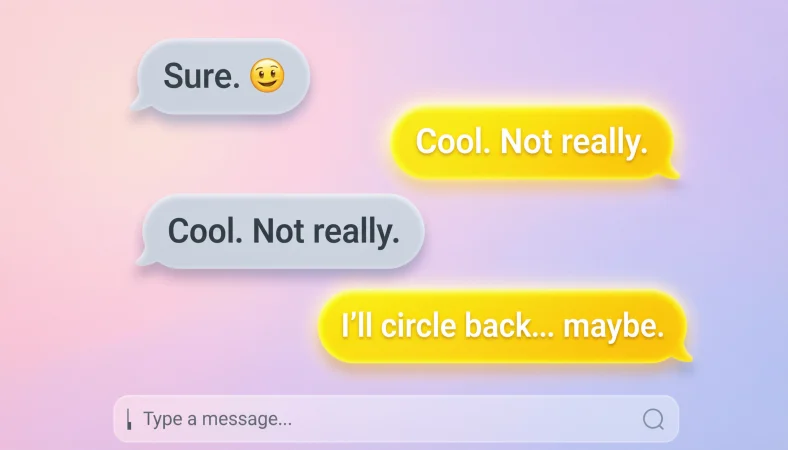
Sometimes you want to say “I don’t care” without sounding rude, awkward, or boring. The trick is picking a tone that fits the moment, whether that’s funny, chill, or straight-up confident.
Top alternatives: Up to you, Not my concern, Do whatever you want, I’m good either way, Doesn’t bother me
We’ve all been there. Someone asks your opinion in a group chat, your coworker over-explains something you’re not invested in, or your friend drags you into drama you didn’t sign up for. And in your head, you’re like… yeah, I don’t care. But saying it directly can come off harsh, awkward, or even disrespectful.
That’s why knowing different ways to say I don’t care is low-key a social survival skill. Whether you’re texting, replying in DMs, talking to a crush, or handling work conversations, the way you phrase it matters. You can sound funny, chill, confident, or even polite without killing the vibe. This guide gives you ready-to-send replies for every mood, so you can stay unbothered and still look smooth doing it.
Funny Responses
I support whatever chaos you choose.
Example: Used when a friend is making a questionable decision.
Meaning: Playfully shows you’re not invested but entertained.
I’m just here for the vibes.
Example: Used in group chats.
Meaning: You’re not taking a stance.
Do whatever makes the story better.
Example: Used jokingly.
Meaning: You care more about entertainment.
I have zero emotional investment in this.
Example: Used humorously.
Meaning: Clearly expresses indifference.
I’ll pretend I care, continue.
Example: Used with close friends.
Meaning: Sarcastic humor.
I’m spiritually uninvolved.
Example: Used jokingly.
Meaning: Lighthearted detachment.
My opinion is on vacation.
Example: Used playfully.
Meaning: You’re not engaging.
I’m just an audience member.
Example: Used in drama situations.
Meaning: You’re observing only.
Not me minding my business.
Example: Used casually.
Meaning: You’re staying out of it.
I’m neutral like Switzerland.
Example: Used jokingly.
Meaning: You’re not choosing sides.
I’m here but not involved.
Example: Used casually.
Meaning: Present but indifferent.
I’ll clap from the sidelines.
Example: Used humorously.
Meaning: Support without involvement.
I have no stakes in this game.
Example: Used jokingly.
Meaning: No personal interest.
I’m just here for snacks.
Example: Used in group settings.
Meaning: You don’t care about the topic.
Carry on without me emotionally.
Example: Used playfully.
Meaning: You’re disengaged.
Fearless Responses
Couldn’t care less.
Example: Used in blunt situations.
Meaning: Total indifference.
That’s not my problem.
Example: Used directly.
Meaning: Clear boundary.
Do I look invested?
Example: Used sarcastically.
Meaning: Shows disinterest.
Not my concern at all.
Example: Used firmly.
Meaning: You’re uninvolved.
Handle it however you want.
Example: Used dismissively.
Meaning: No interest in outcome.
I’m not part of this.
Example: Used when avoiding drama.
Meaning: Clear separation.
That sounds like a you situation.
Example: Used bluntly.
Meaning: Not your responsibility.
I’ll pass on having an opinion.
Example: Used sharply.
Meaning: You don’t care.
Do what you think is best.
Example: Used dismissively.
Meaning: No input.
I’m good either way.
Example: Used neutrally.
Meaning: No preference.
Doesn’t affect me.
Example: Used clearly.
Meaning: No involvement.
I’m not invested in this outcome.
Example: Used firmly.
Meaning: Detached stance.
It’s irrelevant to me.
Example: Used bluntly.
Meaning: No concern.
I’m staying out of it.
Example: Used directly.
Meaning: Avoiding involvement.
Not something I’m worried about.
Example: Used confidently.
Meaning: Calm indifference.
Flirty Responses
I only care if it involves you.
Example: Used with a crush.
Meaning: Redirects attention romantically.
Depends, are you involved?
Example: Used teasingly.
Meaning: Flirty curiosity.
I don’t care… unless it’s about us.
Example: Used playfully.
Meaning: Suggestive tone.
My attention is reserved for you.
Example: Used romantically.
Meaning: Prioritizing them.
I suddenly care if you’re part of it.
Example: Used teasingly.
Meaning: Soft flirt.
Not interested… except in you.
Example: Used confidently.
Meaning: Direct flirt.
I care selectively and you made the list.
Example: Used playfully.
Meaning: Makes them feel special.
I’ll care if you explain it.
Example: Used teasingly.
Meaning: Invites interaction.
You’re the only exception.
Example: Used romantically.
Meaning: Emotional focus.
I care more about your opinion.
Example: Used sweetly.
Meaning: Prioritizing them.
Convince me to care.
Example: Used playfully.
Meaning: Flirty challenge.
I don’t care, but I care about you.
Example: Used softly.
Meaning: Balanced emotion.
Make it interesting for me.
Example: Used teasingly.
Meaning: Invites engagement.
I’ll care if it means more time with you.
Example: Used flirtatiously.
Meaning: Romantic intent.
I’m only paying attention because it’s you.
Example: Used sweetly.
Meaning: Focused interest.
Polite Responses
I’m okay with whatever you decide.
Example: Used in group decisions.
Meaning: Respectful neutrality.
I don’t have a strong preference.
Example: Used professionally.
Meaning: Balanced response.
Either option works for me.
Example: Used casually polite.
Meaning: Flexible attitude.
I’m fine with your choice.
Example: Used respectfully.
Meaning: Trust in others.
No strong feelings either way.
Example: Used neutrally.
Meaning: Calm indifference.
I’ll go along with it.
Example: Used in teamwork.
Meaning: Cooperative tone.
I trust your judgment.
Example: Used politely.
Meaning: Deferring decision.
Whatever works best for you.
Example: Used kindly.
Meaning: Considerate.
I’m easy either way.
Example: Used casually polite.
Meaning: Flexible mindset.
I don’t mind either option.
Example: Used neutrally.
Meaning: No preference.
Happy with whatever you pick.
Example: Used warmly.
Meaning: Positive neutrality.
It’s all good to me.
Example: Used casually.
Meaning: Relaxed tone.
No preference from my side.
Example: Used professionally.
Meaning: Clear neutrality.
I’m okay with both choices.
Example: Used calmly.
Meaning: Balanced.
Up to you.
Example: Used simply.
Meaning: Delegates decision.
Professional Responses
I don’t have a preference on this.
Example: Used in meetings.
Meaning: Neutral stance.
I’m aligned with the team’s direction.
Example: Used in work discussions.
Meaning: Cooperative tone.
Either approach works for me.
Example: Used professionally.
Meaning: Flexible.
I’ll defer to your expertise.
Example: Used respectfully.
Meaning: Trusting others.
No strong opinion from my side.
Example: Used formally.
Meaning: Neutral input.
I’m comfortable with the decision.
Example: Used in approvals.
Meaning: Acceptance.
Happy to proceed either way.
Example: Used in planning.
Meaning: Flexibility.
I don’t see any issues with either option.
Example: Used analytically.
Meaning: Neutral approval.
I’m fine with the proposed plan.
Example: Used formally.
Meaning: Agreement.
Let’s go with what works best.
Example: Used collaboratively.
Meaning: Practical mindset.
No objections from me.
Example: Used in meetings.
Meaning: Approval.
I’m good to move forward.
Example: Used professionally.
Meaning: Agreement.
I’ll support the final decision.
Example: Used formally.
Meaning: Team alignment.
No preference here.
Example: Used briefly.
Meaning: Neutral stance.
Works for me.
Example: Used casually professional.
Meaning: Agreement.
Sarcastic Responses
Wow, I care so much right now.
Example: Used jokingly.
Meaning: Obvious sarcasm.
This is life-changing information.
Example: Used humorously.
Meaning: Mocking importance.
I’m deeply invested, clearly.
Example: Used sarcastically.
Meaning: Opposite meaning.
Oh no, anyway.
Example: Used casually.
Meaning: Indifference meme style.
Tell me more about how I shouldn’t care.
Example: Used sarcastically.
Meaning: Playful mockery.
Fascinating. Not really.
Example: Used jokingly.
Meaning: Disinterest.
I’ll lose sleep over this.
Example: Used sarcastically.
Meaning: Doesn’t matter at all.
This changes nothing for me.
Example: Used dryly.
Meaning: No impact.
I’m overwhelmed with concern.
Example: Used sarcastically.
Meaning: No concern.
Groundbreaking. Truly.
Example: Used jokingly.
Meaning: Mocking importance.
I’ll add it to my list of things I ignore.
Example: Used humorously.
Meaning: Dismissive.
Noted and immediately forgotten.
Example: Used sarcastically.
Meaning: No interest.
Let me pretend to react.
Example: Used jokingly.
Meaning: Fake engagement.
This deserves zero attention.
Example: Used bluntly.
Meaning: No importance.
I feel nothing about this.
Example: Used dry humor.
Meaning: Complete indifference.
Chill And Casual Responses
It’s whatever.
Example: Used casually.
Meaning: No strong feelings.
I’m cool with anything.
Example: Used in plans.
Meaning: Flexible.
Doesn’t matter to me.
Example: Used simply.
Meaning: Neutral stance.
All good either way.
Example: Used casually.
Meaning: Relaxed.
I’m easy.
Example: Used in decisions.
Meaning: No preference.
No big deal.
Example: Used casually.
Meaning: Low importance.
I’m not fussed.
Example: Used informally.
Meaning: Indifference.
It’s all the same to me.
Example: Used neutrally.
Meaning: No difference.
I don’t mind.
Example: Used simply.
Meaning: Acceptance.
No stress.
Example: Used casually.
Meaning: Relaxed tone.
I’m fine either way.
Example: Used often.
Meaning: Neutral.
Doesn’t bother me.
Example: Used casually.
Meaning: No concern.
Go for it.
Example: Used encouragingly.
Meaning: Let them decide.
All yours.
Example: Used casually.
Meaning: Delegates choice.
I’m good.
Example: Used simply.
Meaning: Content.
Confident Responses
I’m not concerned about that.
Example: Used firmly.
Meaning: Clear indifference.
It doesn’t affect my decision.
Example: Used assertively.
Meaning: Focused mindset.
I’m staying focused on what matters.
Example: Used confidently.
Meaning: Priority-driven.
That’s not relevant to me.
Example: Used directly.
Meaning: Clear boundary.
I’m not invested in this.
Example: Used calmly.
Meaning: Emotional detachment.
I’m choosing not to engage.
Example: Used assertively.
Meaning: Intentional distance.
I’ll pass on that.
Example: Used simply.
Meaning: Declining interest.
That’s outside my focus.
Example: Used professionally.
Meaning: Priority clarity.
I’m good without it.
Example: Used confidently.
Meaning: Independence.
I’m not involved in this.
Example: Used clearly.
Meaning: Separation.
I’m okay leaving that alone.
Example: Used calmly.
Meaning: Non-engagement.
It’s not worth my attention.
Example: Used confidently.
Meaning: Value of time.
I’ll sit this one out.
Example: Used casually confident.
Meaning: Opting out.
I’m not concerned either way.
Example: Used neutrally.
Meaning: Balanced detachment.
That doesn’t change anything for me.
Example: Used firmly.
Meaning: Consistent stance.
FAQs
What does “I don’t care” really mean?
It usually means you have no emotional investment or preference in the situation.
Is saying “I don’t care” rude?
It can be, depending on tone and context, so softer alternatives help.
Can it be flirty?
Yes, if you redirect attention to the other person in a playful way.
How do I say it professionally?
Use neutral phrases like “no preference” or “either works for me.”
When should I avoid saying it?
In emotional or sensitive conversations where empathy matters.
Conclusion
Saying “I don’t care” doesn’t have to sound cold, rude, or awkward. With the right tone, you can come across as funny, confident, chill, or even charming. The key is knowing when to soften it, when to joke, and when to keep it direct.
Use these ways to say I don’t care to match your mood and the situation, whether you’re texting friends, replying in DMs, or navigating real-life conversations. Try out different styles, find what fits your personality, and keep your responses fresh. Save your favorites, share them with your friends, and never get stuck in an awkward reply again.