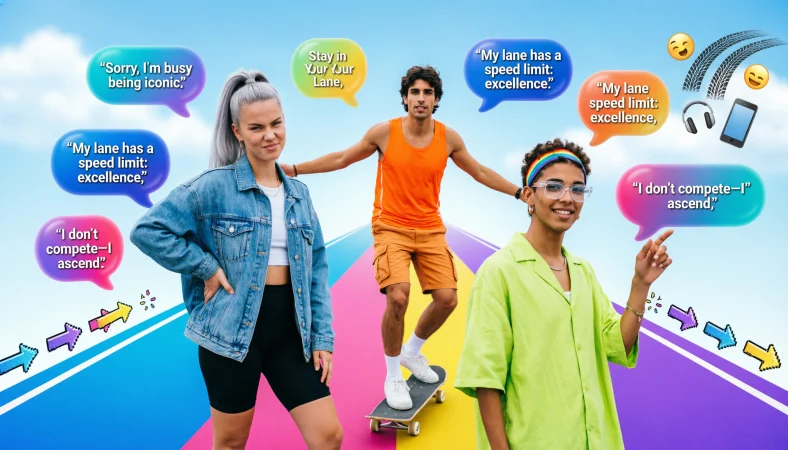
The best Stay in your lane comebacks are short, confident, and perfectly timed. Whether someone is being nosy, disrespectful, or simply doing too much, these replies help you shut it down without losing your cool.
Try these: “Mind your business,” “Worry about your own lane,” “I’m good over here,” “Thanks, but I’ve got this,” “Your opinion has been noted.”
When someone tells you to “stay in your lane,” the first instinct might be to clap back immediately. Fair enough. But the best comeback is not always the loudest one. Sometimes it is a clever one-liner that makes your point and leaves the other person with absolutely nothing to say.
You might need a response during a group chat, a heated text exchange, a social media comment section, or even at work when someone suddenly becomes the CEO of your personal decisions. Friends can tease you with it, strangers can use it rudely, and someone you like might say it jokingly. That is why knowing how to read the situation matters.
These Stay in your lane comebacks give you options for every mood, from funny and sarcastic to amazing, classy, confident, and clever. Pick your energy and let the comeback do the talking.
Funny Stay in Your Lane Comebacks
“Don’t worry, I brought my GPS.”
Use this when someone playfully tells you to stay in your lane.
Meaning: You are turning their warning into a harmless joke.
“I would, but your lane looked boring.”
Use this when you want a playful little roast.
Meaning: You are teasing them without getting overly serious.
“Which lane? I see several.”
Use this when someone is being vague or dramatic.
Meaning: You are humorously refusing to take the comment seriously.
“Relax, I paid for the whole road.”
Use this for a confident social media comeback.
Meaning: You are joking that you have every right to be there.
“My lane has snacks, so I’m staying.”
Use this when you want a silly response.
Meaning: You are choosing humor instead of confrontation.
“I’m just taking the scenic route.”
Use this when someone comments on your choices.
Meaning: You are saying you are doing things your own way.
“Sorry, my lane subscription expired.”
Use this in a funny group chat exchange.
Meaning: You are playfully ignoring their attempt to control you.
“Plot twist: I own the lane.”
Use this when you want a cheeky confidence boost.
Meaning: You are jokingly taking control of the situation.
“I tried, but traffic was terrible.”
Use this after someone tells you to back off.
Meaning: You are using absurd humor to defuse the moment.
“I’ll stay there right after you stop directing traffic.”
Use this when someone is being bossy.
Meaning: You are humorously calling out their controlling behavior.
“Lane? I thought this was a free-roaming server.”
Use this with someone who enjoys internet humor.
Meaning: You are making the situation sound like a chaotic online game.
“I’m not lost, I’m exploring.”
Use this when someone questions your choices.
Meaning: You are confidently reframing your actions as independence.
“My lane has better Wi-Fi anyway.”
Use this when you want a low-stakes roast.
Meaning: You are joking that your own space is better.
“Okay, traffic cop.”
Use this when someone is unnecessarily giving orders.
Meaning: You are teasing them for acting overly authoritative.
“Don’t worry, I know where I’m going.”
Use this when someone seriously questions your direction.
Meaning: You are calmly asserting confidence in yourself.
Amazing Stay in Your Lane Comebacks
“You should try staying in yours first.”
Use this when someone repeatedly crosses boundaries.
Meaning: You are directly pointing out their hypocrisy.
“My lane isn’t your concern.”
Use this when you want a clean, firm response.
Meaning: You are establishing a clear boundary.
“Funny advice from someone driving outside their lane.”
Use this when the person is clearly being hypocritical.
Meaning: You are calling out their behavior without overexplaining.
“You seem unusually invested in my lane.”
Use this when someone is obsessed with your choices.
Meaning: You are highlighting how unnecessary their involvement is.
“Focus on your own direction.”
Use this when you want a mature but firm comeback.
Meaning: You are redirecting their attention toward themselves.
“I’ll worry about my lane when you find yours.”
Use this for a sharper response.
Meaning: You are refusing to accept unsolicited criticism.
“That sounds like a you problem.”
Use this when someone is bothered by something that does not affect them.
Meaning: You are making it clear that their frustration is not your responsibility.
“Your concern has officially expired.”
Use this when someone keeps giving unwanted opinions.
Meaning: You are telling them the discussion is over.
“You can keep the advice. I didn’t order it.”
Use this when someone gives unsolicited opinions.
Meaning: You are rejecting their commentary with confidence.
“I don’t remember hiring a lane supervisor.”
Use this when someone acts overly authoritative.
Meaning: You are sarcastically questioning their role.
“Stay concerned about yourself.”
Use this when someone refuses to respect your boundaries.
Meaning: You are returning their energy without unnecessary drama.
“Your opinion is louder than its importance.”
Use this when someone is being unnecessarily judgmental.
Meaning: You are saying their opinion does not carry much weight.
“That confidence would be impressive if it were relevant.”
Use this when someone speaks confidently about your business.
Meaning: You are pointing out that their confidence does not make them right.
“You crossed into my lane first.”
Use this when they accuse you of interfering.
Meaning: You are reminding them who started the conflict.
“Keep watching. I’m still moving.”
Use this when someone tries to discourage you.
Meaning: You are showing that their comments will not stop you.
Flirty Stay in Your Lane Comebacks
“What if I like your lane?”
Use this when someone you like says it playfully.
Meaning: You are turning their challenge into flirtation.
“Maybe I’m looking for an excuse to be in your lane.”
Use this when the chemistry is obvious.
Meaning: You are openly flirting without being too intense.
“Your lane looks pretty tempting.”
Use this when the conversation already has playful energy.
Meaning: You are responding with cheeky attraction.
“I could stay in mine, but then I wouldn’t meet you.”
Use this with someone you are interested in.
Meaning: You are suggesting that crossing paths with them is worth it.
“Maybe you should invite me into your lane.”
Use this when you want to make the flirting obvious.
Meaning: You are playfully asking them to get closer.
“I only crossed lanes because you caught my attention.”
Use this after someone teases you.
Meaning: You are turning the situation into a compliment.
“If your lane is where you are, I might stay.”
Use this when the mood is sweet and flirty.
Meaning: You are saying you enjoy being around them.
“Careful, I might make your lane my favorite.”
Use this when you want a charming comeback.
Meaning: You are hinting that they are becoming special to you.
“Who said I wanted to stay in my lane?”
Use this when you want playful confidence.
Meaning: You are openly embracing the attraction.
“Maybe I took the wrong turn on purpose.”
Use this when you want a subtle flirt.
Meaning: You are implying that meeting them was intentional.
“Your lane has my attention.”
Use this as a short text reply.
Meaning: You are showing interest in a confident way.
“If you’re in that lane, I might need directions.”
Use this when flirting through text.
Meaning: You are playfully asking for their attention.
“I’m only here because you’re cute.”
Use this when you want something direct and playful.
Meaning: You are openly admitting attraction.
“Maybe our lanes are supposed to cross.”
Use this when the conversation feels romantic.
Meaning: You are suggesting a fun sense of destiny.
“I’ll stay in my lane if you promise to visit mine.”
Use this when you want a flirty challenge.
Meaning: You are inviting mutual attention.
Polite Stay in Your Lane Comebacks
“I appreciate your concern, but I’ve got it handled.”
Use this when you want to stay respectful.
Meaning: You are acknowledging them while maintaining your boundary.
“Thanks, but I’m comfortable with my choices.”
Use this when someone questions your decisions.
Meaning: You are calmly expressing confidence.
“I understand your point, but I’ll make my own decision.”
Use this during a disagreement with someone you respect.
Meaning: You are listening without surrendering your independence.
“I’ll keep that in mind.”
Use this when you want to avoid unnecessary conflict.
Meaning: You are politely acknowledging their comment without agreeing.
“Thanks for the perspective.”
Use this when someone offers unsolicited advice.
Meaning: You are keeping the response mature and neutral.
“I think I’m good where I am.”
Use this when someone tells you what you should do.
Meaning: You are politely declining their direction.
“I respect your opinion, even if I disagree.”
Use this when the conversation becomes serious.
Meaning: You are disagreeing without becoming hostile.
“I’ll handle it my way.”
Use this when someone keeps interfering.
Meaning: You are politely asserting independence.
“I hear you.”
Use this when you want to acknowledge someone without debating.
Meaning: You recognize their words without inviting an argument.
“That’s something I’ll decide for myself.”
Use this when the topic is personal.
Meaning: You are setting a respectful boundary.
“I appreciate the advice, but I’m okay.”
Use this when you want to shut down unwanted suggestions.
Meaning: You are being kind while declining their input.
“I think we can leave it there.”
Use this when the discussion is going nowhere.
Meaning: You are politely ending the exchange.
“Thanks, but I know what works for me.”
Use this when someone questions your lifestyle or choices.
Meaning: You are calmly defending your autonomy.
“I’ll take responsibility for my decision.”
Use this when someone doubts your judgment.
Meaning: You are confidently accepting ownership of your choices.
“No worries, I’ve got my direction figured out.”
Use this when someone tries to redirect you.
Meaning: You are reassuring them while maintaining your position.
Clever Stay in Your Lane Comebacks
“Boundaries are a two-way street.”
Use this when someone tells you to stay out of their business after entering yours.
Meaning: You are cleverly reminding them that boundaries apply to everyone.
“Interesting advice from someone who just changed lanes.”
Use this when someone is being hypocritical.
Meaning: You are exposing the contradiction in their behavior.
“I know my lane. I just don’t confuse it with yours.”
Use this when you want a sophisticated comeback.
Meaning: You are saying you understand boundaries better than they do.
“Personal space works both ways.”
Use this during a tense discussion.
Meaning: You are emphasizing mutual respect.
“If my lane bothers you, perhaps don’t look over here.”
Use this when someone is overly focused on you.
Meaning: You are cleverly pointing out that they can simply disengage.
“Not every opinion deserves a steering wheel.”
Use this when someone tries to control your choices.
Meaning: You are saying opinions do not automatically give someone authority.
“Direction is easier when everyone watches their own road.”
Use this when someone keeps criticizing you.
Meaning: You are promoting independence and boundaries.
“I’ll take the wheel from here.”
Use this when someone keeps trying to guide your decisions.
Meaning: You are reclaiming control confidently.
“Your concern is noted, not adopted.”
Use this when someone gives advice you do not want.
Meaning: You heard them but are not accepting their recommendation.
“I prefer choosing my own route.”
Use this when someone questions your path.
Meaning: You value independence over outside approval.
“Different lanes can still reach different destinations.”
Use this when someone thinks their way is the only right way.
Meaning: You are reminding them that different choices can work.
“I’m not off course just because I’m not following you.”
Use this when someone assumes you are making a mistake.
Meaning: You are confidently rejecting their definition of success.
“Your map isn’t the only map.”
Use this when someone insists their way is correct.
Meaning: You are reminding them that perspectives differ.
“I’ll keep my lane. You keep your commentary.”
Use this when someone cannot stop criticizing.
Meaning: You are setting a clear verbal boundary.
“Respectfully, I’m driving my own story.”
Use this when you want something thoughtful but firm.
Meaning: You are asserting ownership over your life.
Sarcastic Stay in Your Lane Comebacks
“Wow, thanks for the unsolicited navigation.”
Use this when someone gives unnecessary instructions.
Meaning: You are sarcastically calling out their interference.
“Should I also submit my route for approval?”
Use this when someone becomes overly controlling.
Meaning: You are mocking their expectation of authority.
“Do you offer driving lessons too?”
Use this when someone keeps telling you what to do.
Meaning: You are teasing them for acting like an expert.
“I’ll alert the lane department immediately.”
Use this when someone makes a dramatic demand.
Meaning: You are deliberately exaggerating their importance.
“Thanks, Captain Obvious.”
Use this when their comment is unnecessary.
Meaning: You are sarcastically pointing out that their advice adds nothing.
“I’ll put that on my list of things I didn’t ask.”
Use this when someone offers unsolicited criticism.
Meaning: You are dismissing their opinion with humor.
“Should I call you when I need more instructions?”
Use this when someone keeps directing you.
Meaning: You are mocking their self-appointed authority.
“Your concern is truly inspirational.”
Use this when someone is being nosy.
Meaning: You are using exaggerated praise to highlight their interference.
“Amazing. A lane lecture.”
Use this when someone gives a predictable warning.
Meaning: You are showing that you are unimpressed.
“I was waiting for the traffic report.”
Use this when someone starts lecturing you.
Meaning: You are making their seriousness sound ridiculous.
“Noted by absolutely nobody.”
Use this when you want a sharper sarcastic tone.
Meaning: You are dismissing their comment.
“Thanks for the TED Talk.”
Use this after a long unsolicited lecture.
Meaning: You are joking that they have overexplained.
“You must be exhausted from managing everyone.”
Use this when someone constantly tells others what to do.
Meaning: You are sarcastically calling out their controlling nature.
“I’ll frame that advice.”
Use this when their opinion is obviously unhelpful.
Meaning: You are pretending their advice is valuable while doing the opposite.
“What a powerful contribution to nobody’s schedule.”
Use this for a dramatic online comeback.
Meaning: You are highlighting how irrelevant their comment is.
Cute Stay in Your Lane Comebacks
“But my lane has room for you.”
Use this when the person is someone you care about.
Meaning: You are turning a boundary comment into affection.
“Okay, but don’t leave my lane.”
Use this when teasing a close friend.
Meaning: You are playfully showing that you value their presence.
“Fine, I’ll behave.”
Use this when someone is joking with you.
Meaning: You are responding playfully without escalating things.
“Only if you stay in mine too.”
Use this when you want a cute mutual tease.
Meaning: You are turning the warning into playful closeness.
“Oops, my bad. I got distracted.”
Use this when you want to keep things light.
Meaning: You are jokingly admitting you wandered off topic.
“But you make my lane more fun.”
Use this with someone you enjoy spending time with.
Meaning: You are giving them a sweet compliment.
“I promise I’m just passing through.”
Use this when the situation is playful.
Meaning: You are pretending to take their warning seriously.
“Okay, traffic buddy.”
Use this with a close friend.
Meaning: You are making their comment sound cute rather than rude.
“Fine, but you owe me a smile.”
Use this when you want to add playful charm.
Meaning: You are shifting the mood toward friendliness.
“My lane misses you anyway.”
Use this with someone you are close to.
Meaning: You are turning the comeback into affection.
“I’ll stay put if you stay cute.”
Use this when flirting casually.
Meaning: You are mixing a boundary joke with a compliment.
“Deal, but no disappearing.”
Use this with someone you care about.
Meaning: You are playfully asking them to stick around.
“I’m just following the fun.”
Use this when friends tease you.
Meaning: You are saying you went where the good energy was.
“Okay, okay, I’m back in my little lane.”
Use this when you want a harmless response.
Meaning: You are playfully accepting the tease.
“My lane is happier when you’re around.”
Use this with someone special.
Meaning: You are expressing warmth through a playful comeback.
Chill And Casual Stay in Your Lane Comebacks
“I’m good, honestly.”
Use this when you do not want an argument.
Meaning: You are calmly dismissing the criticism.
“No stress, I’ve got it.”
Use this when someone questions your choices.
Meaning: You are reassuring them while staying independent.
“All good over here.”
Use this in a casual text exchange.
Meaning: You are showing that their comment does not bother you.
“I know what I’m doing.”
Use this when someone tries to interfere.
Meaning: You are quietly asserting confidence.
“We’re cool.”
Use this when you want to keep the conversation relaxed.
Meaning: You are avoiding unnecessary drama.
“I’m just doing my thing.”
Use this when someone questions your choices.
Meaning: You are emphasizing that you are comfortable being yourself.
“No worries, you do you.”
Use this when you want to end the topic peacefully.
Meaning: You are giving them space while asking for your own.
“Fair enough.”
Use this when you do not want to debate.
Meaning: You acknowledge their statement without surrendering your position.
“Got you.”
Use this when someone says it playfully.
Meaning: You are keeping your response short and relaxed.
“I hear you, but I’m chilling.”
Use this when someone is making a big deal out of something.
Meaning: You are refusing to get pulled into drama.
“No hard feelings.”
Use this when the exchange gets slightly tense.
Meaning: You are keeping things friendly.
“I’m staying in my own world.”
Use this when someone tells you to mind your business.
Meaning: You are casually saying you prefer keeping to yourself.
“We’re all good.”
Use this after a minor disagreement.
Meaning: You are signaling that there is no need for conflict.
“Cool story.”
Use this when you want a lightly dismissive response.
Meaning: You are showing that their comment does not affect you.
“Anyway, back to my regularly scheduled life.”
Use this when you want to move on quickly.
Meaning: You are humorously refusing to dwell on their comment.
Confident Stay in Your Lane Comebacks
“I know exactly where I belong.”
Use this when someone questions your place.
Meaning: You are showing strong self-confidence.
“I don’t need permission to be myself.”
Use this when someone tries to control your behavior.
Meaning: You are defending your individuality.
“I’m comfortable with my choices.”
Use this when someone criticizes your decisions.
Meaning: You are showing emotional confidence.
“I’ll choose my own direction.”
Use this when someone tries to dictate your path.
Meaning: You are asserting independence.
“I trust myself.”
Use this when someone doubts your judgment.
Meaning: You are expressing confidence without attacking them.
“My life, my decisions.”
Use this when the topic is personal.
Meaning: You are establishing a straightforward boundary.
“I don’t need outside approval.”
Use this when someone tries to make you second-guess yourself.
Meaning: You are showing that their validation is unnecessary.
“I’m not changing course for commentary.”
Use this when criticism starts getting repetitive.
Meaning: You are refusing to let other people’s opinions control you.
“I’m exactly where I need to be.”
Use this when someone questions your progress.
Meaning: You are confidently trusting your own journey.
“I’ll handle my business.”
Use this when someone gets too involved.
Meaning: You are making it clear that you can manage yourself.
“I know my boundaries.”
Use this when someone accuses you of crossing lines.
Meaning: You are confidently stating that you understand personal limits.
“I don’t confuse confidence with permission.”
Use this when someone thinks they can control you.
Meaning: You are making it clear that your confidence does not require their approval.
“I’m not here to fit your expectations.”
Use this when someone criticizes your choices.
Meaning: You are prioritizing authenticity over approval.
“I’m good with being misunderstood.”
Use this when someone refuses to understand your choices.
Meaning: You are choosing peace over explaining yourself endlessly.
“Watch me keep going.”
Use this when someone tries to discourage you.
Meaning: You are turning criticism into motivation.
Creative Stay in Your Lane Comebacks
“My compass points toward my own happiness.”
Use this when someone questions your choices.
Meaning: You are saying your decisions are guided by what feels right to you.
“I’m writing my own road map.”
Use this when someone tells you how to live.
Meaning: You are emphasizing independence.
“Every road has a different story.”
Use this during a thoughtful disagreement.
Meaning: You are recognizing that everyone has a different path.
“I’m taking the route with the best view.”
Use this when someone criticizes your direction.
Meaning: You are confidently choosing what works for you.
“My GPS says confidence, so I’m following it.”
Use this when you want a playful creative comeback.
Meaning: You are humorously trusting yourself.
“I’m not changing lanes, I’m changing the game.”
Use this when someone underestimates you.
Meaning: You are presenting yourself as someone who creates their own rules.
“Some roads are meant to be explored.”
Use this when someone questions your unconventional choices.
Meaning: You are embracing curiosity and independence.
“I prefer roads without spectators.”
Use this when someone constantly watches or judges you.
Meaning: You are asking for space without being aggressive.
“My route, my rhythm.”
Use this as a short caption-style comeback.
Meaning: You are emphasizing individuality.
“I’m following a map you don’t have.”
Use this when someone thinks they understand your journey.
Meaning: You are saying they do not know the full story.
“The destination matters more than your commentary.”
Use this when someone criticizes your process.
Meaning: You are focusing on your goals instead of outside opinions.
“I’m building roads, not waiting for directions.”
Use this when someone tries to limit your ambition.
Meaning: You are showing initiative and independence.
“My story needs my steering wheel.”
Use this when someone tries to control your choices.
Meaning: You are saying your life belongs in your own hands.
“I don’t need the same route to reach a good place.”
Use this when someone insists their way is better.
Meaning: You are reminding them that different paths can succeed.
“Call it a detour. I call it character development.”
Use this after someone criticizes your unexpected choices.
Meaning: You are turning mistakes and changes into growth.
Dramatic Stay in Your Lane Comebacks
“The audacity has officially entered the chat.”
Use this when someone crosses a major boundary.
Meaning: You are dramatically calling out their nerve.
“And here we have another episode of unsolicited opinions.”
Use this when someone starts lecturing you.
Meaning: You are turning their behavior into entertainment.
“My lane? After everything I’ve been through?”
Use this when you want exaggerated humor.
Meaning: You are intentionally making the situation sound hilariously serious.
“How brave of you to enter my business and give directions.”
Use this when someone is being extremely nosy.
Meaning: You are dramatically highlighting their interference.
“This is where the plot gets interesting.”
Use this when a disagreement suddenly escalates.
Meaning: You are treating the drama like a movie.
“Someone call the boundary department.”
Use this when someone seriously oversteps.
Meaning: You are making their behavior sound like an official emergency.
“I fear your concern has become a full-time occupation.”
Use this when someone cannot stop talking about you.
Meaning: You are joking about their excessive interest.
“The way you monitor my lane deserves its own documentary.”
Use this when someone constantly watches your choices.
Meaning: You are exaggerating their nosiness for comedic effect.
“Breaking news: I’m still doing what I want.”
Use this when someone tries to stop you.
Meaning: You are dramatically announcing your independence.
“Alert the media. I have offended the lane police.”
Use this when someone gets overly serious.
Meaning: You are mocking the seriousness of their comment.
“I’ll never recover from this lane violation.”
Use this when you want absurd humor.
Meaning: You are intentionally exaggerating a minor interaction.
“The betrayal. The drama. The unsolicited advice.”
Use this when friends tease you.
Meaning: You are turning a small issue into playful theatrics.
“And suddenly, everyone became a driving instructor.”
Use this when multiple people give you advice.
Meaning: You are joking about everyone trying to control the situation.
“This lane has seen things you wouldn’t understand.”
Use this when you want mysterious humor.
Meaning: You are playfully making your situation sound dramatic.
“I came for peace and apparently got a traffic hearing.”
Use this when someone starts an unnecessary argument.
Meaning: You are humorously describing how overblown the situation feels.
Smart And Classy Stay in Your Lane Comebacks
“I respect your perspective, but I trust my judgment.”
Use this during a mature disagreement.
Meaning: You are balancing respect with self-confidence.
“Not every decision needs outside approval.”
Use this when someone questions your personal choices.
Meaning: You are reinforcing your independence.
“We can disagree without crossing boundaries.”
Use this when the conversation becomes tense.
Meaning: You are asking for mutual respect.
“I’m open to advice when I ask for it.”
Use this when someone repeatedly gives unsolicited opinions.
Meaning: You are setting a clear but polite boundary.
“Your perspective is yours, and my decision is mine.”
Use this when someone insists their opinion should control you.
Meaning: You are separating opinions from personal choices.
“I don’t need to justify every choice I make.”
Use this when someone demands explanations.
Meaning: You are asserting your right to privacy.
“I understand your concern, but I’m responsible for my path.”
Use this when someone expresses genuine concern.
Meaning: You are acknowledging them while retaining responsibility.
“Respectfully, I’ll make that call.”
Use this when you want a short professional-sounding boundary.
Meaning: You are calmly taking ownership of the decision.
“We can have different opinions without making it personal.”
Use this during an argument.
Meaning: You are encouraging respectful disagreement.
“I value feedback, but I decide what applies to me.”
Use this when someone gives advice.
Meaning: You are listening without blindly accepting it.
“My choices may differ from yours, and that’s okay.”
Use this when someone criticizes your lifestyle.
Meaning: You are normalizing different perspectives.
“I’d rather focus on what I can control.”
Use this when someone tries to drag you into drama.
Meaning: You are choosing emotional maturity.
“I’m confident enough to choose differently.”
Use this when someone expects you to follow their lead.
Meaning: You are embracing individuality.
“There’s room for both of us to do things differently.”
Use this when someone argues that only their way works.
Meaning: You are promoting tolerance and independence.
“I’ll keep my boundaries, and you can keep yours.”
Use this when someone demands distance.
Meaning: You are agreeing to mutual respect without hostility.
Clever And Short Stay in Your Lane Comebacks
“Noted. Still moving.”
Use this when you want a short confident reply.
Meaning: You heard them, but you are not stopping.
“My lane, my rules.”
Use this as a bold text or caption.
Meaning: You are asserting control over your choices.
“Stay focused, friend.”
Use this when someone becomes too interested in your business.
Meaning: You are subtly redirecting their attention.
“Wrong lane, right confidence.”
Use this when someone is confidently incorrect.
Meaning: You are pointing out their misplaced certainty.
“Mind yours, I’ll mind mine.”
Use this when you want a classic boundary-setting line.
Meaning: You are asking for mutual privacy.
“I’m good over here.”
Use this when you want to keep things simple.
Meaning: You are saying their interference is unnecessary.
“Keep your lane. I’ll keep my peace.”
Use this when you want a mature comeback.
Meaning: You are prioritizing peace over arguments.
“You do you. I’ll do better.”
Use this when you want a slightly fierce twist.
Meaning: You are confidently refusing to be affected.
“Different lane, same destination.”
Use this when someone criticizes your approach.
Meaning: You are reminding them that different methods can work.
“I’m not accepting backseat driving.”
Use this when someone tries to control your decisions.
Meaning: You are refusing unwanted direction.
“That lane is already occupied.”
Use this when someone tries to insert themselves into your business.
Meaning: You are telling them there is no room for their interference.
“Keep watching from your lane.”
Use this when someone keeps monitoring you.
Meaning: You are telling them to observe without interfering.
“I’m right where I want to be.”
Use this when someone questions your choices.
Meaning: You are confidently standing by yourself.
“No detour needed.”
Use this when someone tries to redirect you.
Meaning: You are saying your current path is working.
“Thanks, but I drive my own life.”
Use this when someone becomes too controlling.
Meaning: You are clearly asserting independence.
FAQs
What does “stay in your lane” mean?
“Stay in your lane” usually means to mind your own business, respect boundaries, or avoid getting involved in something that does not concern you.
Is “stay in your lane” rude?
It can be. The phrase often sounds dismissive or confrontational, although close friends may use it jokingly.
What is the best comeback to “stay in your lane”?
A strong all-purpose response is “I’ll stay in mine if you stay in yours.” It is short, confident, and works in many situations.
Can I use funny Stay in Your Lane comebacks?
Absolutely. Humor works especially well when the other person is teasing rather than genuinely trying to insult you.
What is a good dreadful response?
Try “You should try staying in yours first.” It is direct and works particularly well when the person is being hypocritical.
What is a classy response?
Try “I respect your perspective, but I trust my judgment.” It keeps the situation mature while protecting your boundaries.
What should I say if I do not want an argument?
Use something simple like “I hear you, but I’m good.” It acknowledges the person without inviting more drama.
Can I use these responses at work?
Some can work in casual workplace situations, but professional settings call for calmer options such as “I appreciate your concern, but I’ll handle it.”
What if a friend says “stay in your lane” jokingly?
Match their energy. A playful response such as “I would, but your lane looked boring” keeps the exchange fun.
How do I avoid sounding too aggressive?
Choose confident or polite responses rather than brutal ones, and focus on setting a boundary instead of insulting the other person.
Conclusion
The perfect comeback does not have to be the meanest one in the group chat. Sometimes a funny line gets the biggest laugh, while a calm response makes the strongest statement. The key is knowing your audience, reading the mood, and choosing words that match the moment.
Whether you want to be fierce, sarcastic, flirty, classy, clever, or completely unbothered, there is a response here for your energy. Remember, confidence does not always need volume. A short, well-timed sentence can say everything without creating unnecessary drama. Save this list for your next awkward encounter, share it with your favorite comeback expert, and keep your lane legendary.