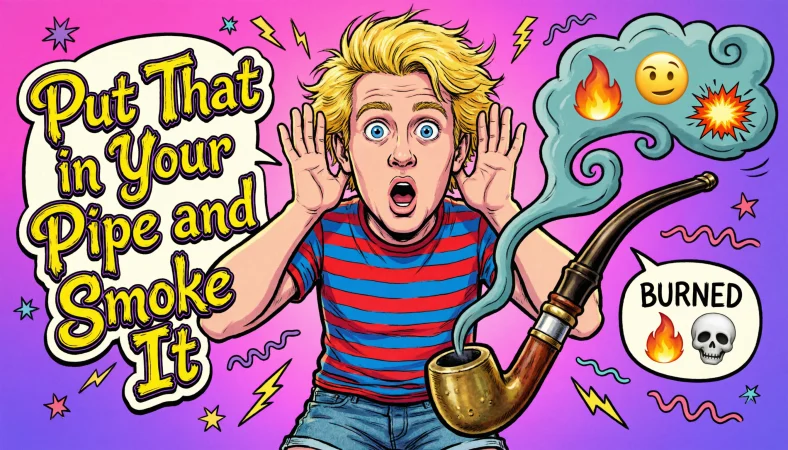
“Put that in your pipe and smoke it” is a cheeky phrase meaning “deal with that” or “take that as the final word.” The best replies can agree, roast the speaker, flip the attitude, or turn the whole thing into a joke.
Top alternatives: Consider it smoked, Message received, I’ll pass on the pipe, That’s one way to put it, You really thought you ate
Some phrases walk into a conversation wearing sunglasses and demanding attention, and “put that in your pipe and smoke it” is definitely one of them. It is usually delivered with confidence, attitude, or a healthy dose of playful sass.
You might hear it during a friendly argument, see it in a group chat, encounter it in a funny DM, or get hit with it by someone who is convinced they just delivered the ultimate comeback. That is exactly why having the right response matters.
You can agree and keep things moving, fire back with a clever roast, or completely defuse the moment with humor. The phrase has an old-school swagger, but your response does not have to sound like it came from a dusty sitcom. Whether you want to be funny, sarcastic, dreadful, polite, or effortlessly cool, the right comeback can make the exchange ten times better.
Funny Responses
- I left my pipe at home.
Example: Use this when someone drops the phrase during playful banter.
Meaning: It humorously refuses to take the command literally. - Sorry, my pipe is currently out of office.
Example: Perfect for a goofy group chat.
Meaning: It turns the phrase into workplace humor. - Can I get that to go?
Example: Use when you want a quick food-style comeback.
Meaning: It makes the statement sound like a restaurant order. - I prefer my arguments pipe-free.
Example: Great for a lighthearted disagreement.
Meaning: It rejects the attitude without becoming serious. - Thanks, but I’m on a no-smoking plan.
Example: Use when you want a clean joke.
Meaning: It flips the phrase into a playful refusal. - Bold of you to assume I have a pipe.
Example: Perfect for sarcastic banter.
Meaning: It points out how ridiculous the phrase sounds literally. - I’ll put it in my imaginary pipe.
Example: Use for absurd humor.
Meaning: It pretends to accept the statement in a ridiculous way. - Does the pipe come with instructions?
Example: Great when someone is being overly confident.
Meaning: It playfully questions their dramatic command. - One pipe, zero interest.
Example: Use as a short witty comeback.
Meaning: It confidently rejects the suggestion. - My pipe just filed a complaint.
Example: Perfect for random humor.
Meaning: It personifies the pipe to make the comeback absurd. - I’ll smoke that thought over first.
Example: Use when you want a clever pun.
Meaning: It flips the phrase into a humorous decision-making joke. - That sounds expensive. I’ll pass.
Example: Great for casual banter.
Meaning: It jokingly treats the statement like a questionable purchase. - Sir, this is a breakfast establishment.
Example: Use when the conversation is already chaotic.
Meaning: It uses an internet-style absurd response. - I came here for vibes, not pipe-related assignments.
Example: Perfect for a group chat.
Meaning: It humorously rejects the seriousness of the statement. - Noted, smoked, and emotionally processed.
Example: Use when you want an exaggerated response.
Meaning: It pretends to have completely handled the message.
Brutal Responses
- You really thought that finished the conversation.
Example: Use when someone acts overly victorious.
Meaning: It challenges their confidence. - That sounded better in your head, huh?
Example: Perfect for a weak comeback.
Meaning: It directly questions the quality of their line. - Cute speech. Still wrong.
Example: Use during a playful argument.
Meaning: It dismisses the statement while staying concise. - That pipe must be carrying your ego.
Example: Great for roasting someone being arrogant.
Meaning: It turns their confidence against them. - I’d smoke it, but I don’t consume bad takes.
Example: Use when someone makes an obviously questionable argument.
Meaning: It dismisses their opinion as poor quality. - You brought a pipe to a facts fight.
Example: Perfect when you have evidence on your side.
Meaning: It suggests their attitude cannot beat facts. - That was adorable. Try again.
Example: Use for confident banter.
Meaning: It playfully belittles their comeback. - The confidence is impressive. The argument is not.
Example: Great for a sharp response.
Meaning: It separates their confidence from the weakness of their point. - You can keep the pipe. I’ll keep the facts.
Example: Use when an argument gets heated.
Meaning: It emphasizes evidence over attitude. - That line needs more seasoning.
Example: Perfect for roasting a weak comeback.
Meaning: It says their response was not impressive enough. - I expected better from the pipe department.
Example: Use for absurd sarcasm.
Meaning: It makes fun of their dramatic wording. - That comeback arrived without a warranty.
Example: Great for a witty roast.
Meaning: It jokes that their argument is unreliable. - You brought attitude. I brought receipts.
Example: Use when you have proof to support your position.
Meaning: It confidently highlights your evidence. - I’ll pass on the smoke and take the facts.
Example: Perfect for a debate.
Meaning: It rejects empty attitude in favor of substance. - That pipe is doing a lot of heavy lifting for a weak point.
Example: Use when someone relies on dramatic wording.
Meaning: It mocks their lack of a strong argument.
Flirty Responses
- Only if you’re sharing the pipe.
Example: Use when the phrase comes from someone you are flirting with.
Meaning: It turns the attitude into playful intimacy. - Careful, that confidence is attractive.
Example: Perfect for bold romantic banter.
Meaning: It openly compliments their confidence. - I might, if you keep talking like that.
Example: Use when the conversation already has chemistry.
Meaning: It playfully rewards their boldness. - You always this bossy, or am I special?
Example: Great for teasing a crush.
Meaning: It turns their command into flirtation. - That attitude almost makes the pipe sound tempting.
Example: Use for cheeky flirting.
Meaning: It suggests their confidence is appealing. - I’ll consider it if you ask nicely.
Example: Perfect for playful romantic tension.
Meaning: It invites them to soften their command. - You really enjoy telling me what to do, don’t you?
Example: Use when the banter is confident and teasing.
Meaning: It playfully calls out their bossy energy. - That confidence deserves a second look.
Example: Great for subtle flirting.
Meaning: It signals attraction without being too direct. - I was going to argue, but you’re distracting.
Example: Use with someone you find attractive.
Meaning: It turns disagreement into a compliment. - You make sass look dangerously good.
Example: Perfect for flirtatious banter.
Meaning: It compliments their attitude. - I’ll let you have this one, but only because you’re cute.
Example: Use when you want playful affection.
Meaning: It combines teasing with a compliment. - That was bold. I like bold.
Example: Great for confident flirting.
Meaning: It shows attraction to their personality. - Keep talking like that and I might actually listen.
Example: Use when you want playful romantic tension.
Meaning: It suggests their confidence is winning you over. - You’re lucky that attitude works on me.
Example: Perfect for a cheeky crush conversation.
Meaning: It admits their personality has an effect on you. - Fine, but you owe me a better date afterward.
Example: Use when flirting with someone you already know well.
Meaning: It turns the phrase into a playful invitation.
Sarcastic Responses
- Wow, what a groundbreaking argument.
Example: Use when someone is overly proud of a weak point.
Meaning: It sarcastically mocks their confidence. - Should I applaud now or later?
Example: Perfect for a dramatic comeback.
Meaning: It jokes about their supposed victory. - Thank you for your pipe-based wisdom.
Example: Use when someone sounds unnecessarily authoritative.
Meaning: It mocks the dramatic phrase. - I’ll alert the historians.
Example: Great for exaggerating the importance of their statement.
Meaning: It pretends their comment deserves historical recognition. - Groundbreaking. Truly.
Example: Use for dry sarcasm.
Meaning: It sarcastically suggests nothing new was said. - And here I thought we were having a normal conversation.
Example: Perfect when someone suddenly gets dramatic.
Meaning: It highlights the ridiculousness of the phrase. - Congratulations on discovering confidence.
Example: Use when teasing an arrogant person.
Meaning: It sarcastically praises their attitude. - I’ll add that to my list of things I didn’t ask for.
Example: Great for a dismissive comeback.
Meaning: It makes clear their statement was unnecessary. - Fascinating. The pipe has spoken.
Example: Use for absurd sarcasm.
Meaning: It pretends the pipe itself delivered wisdom. - I’ll consult the ancient scrolls.
Example: Perfect for theatrical humor.
Meaning: It exaggerates the importance of their statement. - Your confidence has entered the chat.
Example: Use when someone is acting especially bold.
Meaning: It calls attention to their attitude. - I’m writing this down for absolutely no reason.
Example: Great for dry humor.
Meaning: It pretends their statement deserves documentation. - Noted with the appropriate amount of skepticism.
Example: Use during a debate.
Meaning: It politely disguises disbelief as seriousness. - What an era-defining moment.
Example: Perfect for dramatic sarcasm.
Meaning: It exaggerates a minor statement. - I’ll recover from this information eventually.
Example: Use when someone gives an unnecessary opinion.
Meaning: It humorously exaggerates your reaction.
Polite Responses
- I’ll take that under advisement.
Example: Use when you want to stay calm during disagreement.
Meaning: It acknowledges the statement without agreeing. - I appreciate your perspective.
Example: Perfect for a respectful discussion.
Meaning: It recognizes their opinion without endorsing it. - Noted. I’ll think about it.
Example: Use when you want a neutral response.
Meaning: It keeps the conversation civil. - I understand what you’re saying.
Example: Great for a disagreement with someone you respect.
Meaning: It shows you heard their point. - Fair enough. I’ll consider it.
Example: Use when you want to avoid unnecessary conflict.
Meaning: It politely acknowledges their position. - Thanks for sharing your thoughts.
Example: Perfect for a calm response.
Meaning: It keeps the interaction respectful. - I’ll keep that in mind.
Example: Use when you do not want to argue.
Meaning: It acknowledges the comment without making a commitment. - Point taken.
Example: Great for a concise response.
Meaning: It admits you understand their argument. - I see where you’re coming from.
Example: Use during a disagreement.
Meaning: It demonstrates empathy without necessarily agreeing. - That’s certainly one perspective.
Example: Perfect for politely disagreeing.
Meaning: It acknowledges their view while leaving room for another. - I respect your opinion.
Example: Use when the conversation needs a calmer tone.
Meaning: It keeps disagreement respectful. - I’ll give it some thought.
Example: Great when you want time before responding fully.
Meaning: It avoids a rushed reaction. - I hear you.
Example: Use in a serious discussion.
Meaning: It signals that their point has been acknowledged. - Thanks. I’ll take that into consideration.
Example: Perfect for a measured response.
Meaning: It shows openness without promising agreement. - Let’s agree to disagree.
Example: Use when the argument is going nowhere.
Meaning: It respectfully ends the disagreement.
Creative Responses
- I’ll file that under “things the pipe believes.”
Example: Use when someone delivers a dramatic opinion.
Meaning: It playfully separates the statement from reality. - The pipe has entered the chat, apparently.
Example: Perfect for group chat humor.
Meaning: It turns the phrase into an unexpected character. - I accept your side quest.
Example: Use when someone gives you an unusual challenge.
Meaning: It frames the exchange like a video game mission. - Adding that to my emotional junk drawer.
Example: Great for a playful response to unsolicited advice.
Meaning: It jokes that you are storing their comment away. - I’ll frame it next to my other questionable decisions.
Example: Use for self-deprecating humor.
Meaning: It makes their statement sound like another funny life moment. - The council will review your pipe statement.
Example: Perfect for absurd group chat banter.
Meaning: It pretends an imaginary council will judge the argument. - Your pipe has been received and logged.
Example: Use for mock-formal humor.
Meaning: It treats the phrase like official paperwork. - I’ll add that to the lore.
Example: Great for internet-style humor.
Meaning: It suggests the moment has become part of your shared history. - The prophecy has been delivered.
Example: Use when someone sounds overly dramatic.
Meaning: It exaggerates their statement for comedy. - I’ll put it next to my emergency sarcasm.
Example: Perfect for a witty reply.
Meaning: It humorously pretends to store sarcasm for later. - The pipe speaks, but the people remain unconvinced.
Example: Use during playful disagreement.
Meaning: It creates a mock-political scenario around the argument. - I’ll submit this to the Department of Unsolicited Opinions.
Example: Great for sarcastic humor.
Meaning: It jokingly categorizes their comment. - Your statement has been added to the museum of bold claims.
Example: Use when someone is very confident.
Meaning: It humorously preserves their claim as an exhibit. - I’ll let my future self deal with that.
Example: Perfect for avoiding a response.
Meaning: It humorously postpones the issue. - Interesting. The plot has thickened.
Example: Use when the conversation becomes dramatic.
Meaning: It signals that things just became more interesting.
Cute Responses
- Okay, bossy pants.
Example: Use with a close friend or romantic interest.
Meaning: It playfully teases their commanding tone. - Only because you asked so dramatically.
Example: Great for playful affection.
Meaning: It lightly teases their delivery. - Fine, but I get a cookie afterward.
Example: Use for a cute silly response.
Meaning: It turns the statement into a playful bargain. - You’re so dramatic, and I kind of love it.
Example: Perfect for someone you like.
Meaning: It affectionately compliments their personality. - I’ll pretend you won this round.
Example: Use during friendly banter.
Meaning: It playfully gives them a fake victory. - Okay, you little menace.
Example: Great for a close friend.
Meaning: It affectionately calls out their mischievous behavior. - Fine, I’ll play along.
Example: Use when someone is joking around.
Meaning: It shows you are enjoying the interaction. - You make arguing way too entertaining.
Example: Perfect for playful chemistry.
Meaning: It suggests you enjoy their banter. - That was oddly adorable.
Example: Use after a funny dramatic statement.
Meaning: It turns their attitude into affection. - I’ll give you this one, tiny victory included.
Example: Great for playful competition.
Meaning: It gives them a teasing win. - You really came prepared with the sass today.
Example: Use when someone is unusually witty.
Meaning: It playfully compliments their energy. - Okay, I’m listening, spicy pants.
Example: Perfect for silly friendship banter.
Meaning: It adds a goofy nickname to the exchange. - Your confidence is doing adorable things today.
Example: Use with someone you like.
Meaning: It affectionately notices their boldness. - Fine, you win this tiny argument.
Example: Great for harmless disagreements.
Meaning: It keeps the mood light. - Now come here and explain yourself.
Example: Use when playful teasing is already happening.
Meaning: It invites more interaction with affectionate energy.
Dramatic Responses
- The pipe has spoken, and civilization may never recover.
Example: Use for maximum theatrical humor.
Meaning: It exaggerates the moment into a historical event. - I shall carry this burden forever.
Example: Perfect for absurd drama.
Meaning: It pretends their statement deeply affected you. - Tell my story when I’m gone.
Example: Use when someone delivers an overly confident comeback.
Meaning: It dramatically exaggerates your reaction. - This is the darkest chapter of my journey.
Example: Great for playful overreaction.
Meaning: It treats a tiny disagreement like a tragedy. - I have been defeated by the pipe.
Example: Use when you want to pretend they won.
Meaning: It humorously surrenders. - The prophecy warned me about this moment.
Example: Perfect for absurd drama.
Meaning: It pretends the exchange was destined. - I fear nothing will ever be the same.
Example: Use for an exaggerated reaction.
Meaning: It turns the statement into a life-changing event. - The kingdom shall remember this insult.
Example: Great for theatrical banter.
Meaning: It creates a fake royal drama. - The council will hear about this.
Example: Use in a chaotic group chat.
Meaning: It pretends an imaginary authority will handle the situation. - I shall retreat with dignity.
Example: Perfect when pretending to lose an argument.
Meaning: It turns surrender into comedy. - My ancestors are shaking their heads.
Example: Use for ridiculous dramatic humor.
Meaning: It exaggerates embarrassment. - This pipe-based betrayal will not be forgotten.
Example: Great for playful conflict.
Meaning: It treats a joke as a historic betrayal. - And thus, the saga continues.
Example: Use when the banter keeps escalating.
Meaning: It frames the conversation as an ongoing epic. - The audacity has reached legendary status.
Example: Perfect when someone is being extremely bold.
Meaning: It exaggerates their confidence for humor. - I shall recover when the stars align.
Example: Use for dramatic sarcasm.
Meaning: It humorously claims the comment has devastated you.
Chill And Casual Responses
- Fair enough.
Example: Use when you want to keep things relaxed.
Meaning: It casually acknowledges their statement. - Noted.
Example: Perfect for a short response.
Meaning: It confirms you heard them. - I’ll think about it.
Example: Use when you want a neutral answer.
Meaning: It leaves your position open. - You got it.
Example: Great for casual agreement.
Meaning: It shows easy acceptance. - Alright, alright.
Example: Use when someone is playfully bossy.
Meaning: It acknowledges them without taking things seriously. - Message received.
Example: Perfect for a cool response.
Meaning: It confirms their point landed. - Okay, I hear you.
Example: Use during friendly disagreement.
Meaning: It acknowledges their perspective. - I’ll keep that in the back of my mind.
Example: Great for a relaxed response.
Meaning: It says you will consider it. - Sure thing.
Example: Use for an effortless reply.
Meaning: It casually accepts their statement. - Gotcha.
Example: Perfect for texting.
Meaning: It shows you understand. - Alright, pipe master.
Example: Use with a friend who loves jokes.
Meaning: It playfully gives them a ridiculous title. - Cool story.
Example: Great for teasing.
Meaning: It humorously downplays their dramatic statement. - We’ll see about that.
Example: Use when you want playful uncertainty.
Meaning: It keeps the banter going. - Fair warning received.
Example: Perfect for casual teasing.
Meaning: It acknowledges their statement with a playful edge. - No worries, I got the memo.
Example: Use when you want a relaxed response.
Meaning: It confirms you understood them.
Confident Responses
- I’ll take the facts, thanks.
Example: Use when someone tries to overpower an argument with attitude.
Meaning: It confidently prioritizes substance. - You can keep the pipe. I’ll keep my opinion.
Example: Great for standing your ground.
Meaning: It refuses to be pressured. - I’m comfortable disagreeing.
Example: Use during a serious disagreement.
Meaning: It confidently accepts different opinions. - Nice try, but I’m not convinced.
Example: Perfect for playful debate.
Meaning: It confidently rejects their argument. - You made your point. I still disagree.
Example: Use for mature disagreement.
Meaning: It acknowledges their point without surrendering yours. - Confidence noted. Logic pending.
Example: Great for a sharp comeback.
Meaning: It questions whether their confidence is supported by reasoning. - I don’t need the pipe to make my point.
Example: Use when you want a confident response.
Meaning: It says your argument can stand on its own. - I’ll stick with what I know.
Example: Perfect when someone challenges your position.
Meaning: It communicates self-assurance. - You do you. I’ll do me.
Example: Use when ending a disagreement.
Meaning: It confidently establishes separate opinions. - I heard you the first time.
Example: Great when someone repeats themselves.
Meaning: It calmly signals that their message is already understood. - I’m not intimidated by dramatic wording.
Example: Use when someone is trying to sound intimidating.
Meaning: It shows emotional confidence. - You can have the last word if it makes you happy.
Example: Perfect for ending playful arguments.
Meaning: It refuses to compete over who gets the final statement. - I know what I think.
Example: Use for a concise confident response.
Meaning: It reinforces independence. - The pipe doesn’t change the facts.
Example: Great for a debate.
Meaning: It emphasizes that attitude does not alter reality. - I’ll consider it, but I’m not folding.
Example: Use when you want to remain open but firm.
Meaning: It shows flexibility without giving up your position.
Clever Responses
- I’ll put it in my pipe, but I’m not promising to smoke it.
Example: Use when you want to flip the phrase cleverly.
Meaning: It acknowledges the joke while refusing the implied demand. - I prefer to keep my thoughts un-smoked.
Example: Perfect for wordplay.
Meaning: It creates a humorous alternative to the phrase. - The pipe is optional; the comeback is not.
Example: Use during playful banter.
Meaning: It confidently signals that you have your own response. - Consider it placed, not necessarily consumed.
Example: Great for a mock-serious reply.
Meaning: It cleverly separates receiving an idea from accepting it. - I’ll file that under “interesting, but questionable.”
Example: Use for a clever disagreement.
Meaning: It acknowledges their point while expressing doubt. - The smoke is distracting from the argument.
Example: Perfect for a debate.
Meaning: It suggests their dramatic delivery lacks substance. - Pipe received. Opinion pending.
Example: Use for a concise clever comeback.
Meaning: It says you heard them but have not agreed. - I’ll take the message and leave the tobacco.
Example: Great for a clean pun.
Meaning: It cleverly accepts the idea while rejecting the literal imagery. - That’s one way to package an opinion.
Example: Use when someone is overly dramatic.
Meaning: It comments on their delivery rather than their point. - Your metaphor has been successfully processed.
Example: Perfect for dry humor.
Meaning: It acknowledges the phrase in a mock-formal way. - The pipe is loud, but the logic is quiet.
Example: Use during a debate.
Meaning: It cleverly questions their reasoning. - I’ll consider the smoke, but I’m keeping my eyes open.
Example: Great for a thoughtful comeback.
Meaning: It suggests you will not blindly accept their claim. - Argument received, attitude optional.
Example: Use when someone is being unnecessarily aggressive.
Meaning: It separates their point from their attitude. - That phrase came with a lot of seasoning.
Example: Perfect for playful teasing.
Meaning: It jokes about how dramatically they delivered it. - I admire the confidence, if not the conclusion.
Example: Use for clever disagreement.
Meaning: It compliments their delivery while rejecting their point.
FAQs
What does “Put That in Your Pipe and Smoke It” mean?
It is an old-fashioned, confident way of saying “deal with that,” “think about that,” or “accept that as my final point.”
Is “Put That in Your Pipe and Smoke It” rude?
It can sound rude, dismissive, or condescending depending on the context. Among friends, it may simply be playful banter.
Is “Put That in Your Pipe and Smoke It” flirty?
The phrase itself is not inherently flirty. However, playful teasing can become flirtatious when used between people who already have romantic chemistry.
What is a funny response?
Try “I left my pipe at home” or “Bold of you to assume I have a pipe.” Both turn the phrase into light humor.
What is a sarcastic response?
“Wow, what a groundbreaking argument” works well when someone is acting overly confident.
What can I say if I disagree?
Try “You made your point. I still disagree.” It is direct without unnecessarily escalating the conversation.
Can I use the phrase professionally?
Generally, it is better avoided in formal professional settings because it can sound dismissive or confrontational.
What if I do not want to argue?
Use a neutral reply such as “Fair enough” or “I’ll think about it.” These keep the conversation calm.
Is humor appropriate?
Yes, especially among friends or in casual online conversations. The phrase already has a playful, old-school quality that works well with jokes.
What is the best overall comeback?
“I’ll put it in my pipe, but I’m not promising to smoke it.” It flips the original phrase while keeping the exchange playful.
Conclusion
“Put that in your pipe and smoke it” comes with serious old-school swagger, but your response does not have to match the intensity. You can turn it into a joke, answer with sarcasm, flirt back, stand your ground, or simply keep things calm.
The best comeback depends on who said it, why they said it, and whether the moment calls for humor or honesty. A clever response can turn a tense exchange into a laugh, while a confident response can make it clear that you are not easily pushed around.
Save your favorites for the next group chat debate, playful argument, or unexpected DM. Pick your vibe, deliver it confidently, and let the banter do the rest.